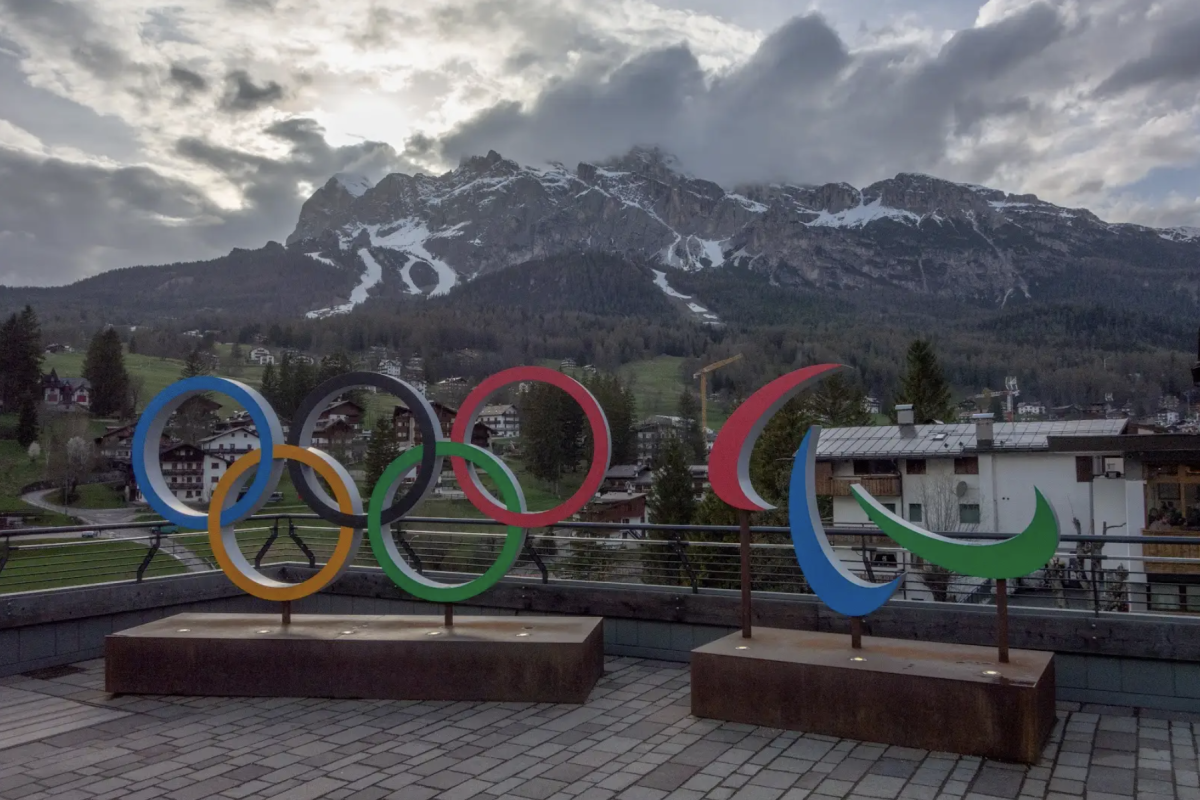
The Olympics are known for pushing the limits of human performance, and witnessing the turns, spins, and speed of Olympic athletes is always something special. This was certainly true during the mogul skiing event at the 2026 Milano-Cortina Winter Olympics, which featured exhilarating runs and unexpected results.
In mogul skiing, athletes race down a course covered in large mounds (moguls) while completing two jumps along the way. Skiers narrow their stance and use their knees to absorb impact, requiring serious control of balance and speed.
Single Moguls vs Dual Moguls
In previous years, there has been only one mogul event — single moguls — where athletes go one at a time and aim for the highest score. The 2026 Olympics introduced “dual moguls,” a brand-new event where two athletes compete side-by-side, racing to outscore each other.
In single moguls, the top 10 athletes from each of the two qualifying rounds advance to Final 1, making 20 qualifiers total. The top 8 from Final 1 move on to Final 2, where only that final score determines the standings. Scores are broken down as follows: 60% turns (how well they navigate the moguls), 20% air (difficulty, height, and quality of the jumps), and 20% speed.
In dual moguls, 16 athletes enter an elimination bracket and keep advancing by beating their opponents until the final. For dual moguls, scoring is weighed a little differently: 50% turns, 25% air, and 25% speed.
Since the two events are so similar, the top competitors tend to overlap.
Women’s (Single) Moguls
Australia’s Jakara Anthony, the 2022 Olympic gold medalist, was the favorite to defend her title. After bouncing back from a collarbone injury in the 2024-25 season, she looked sharp and topped the charts in both Qualifying 1 and Final 1.
Unfortunately, Final 2 was a different story. Anthony lost control on the upper half of the course, skied off, and finished just 8th. American Elizabeth Lemley, in her Olympic debut, won the gold with a score of 82.30, while fellow American Jaelin Kauf took silver at 80.77– a historic 1-2 finish for the Americans. Both France’s Perrine Laffont and Japan’s Hinako Tomitaka scored 78.00, but Laffont’s edge in the turns category broke the tie and earned her bronze.
Women’s Dual Moguls
Many of the top seeds advanced smoothly to the semifinals, though Anthony and Laffont had to fight past Tess Johnson and Olivia Giaccio in tight matchups. The semifinals got wild– Kauf fell but still advanced when her opponent went off course for an automatic DNF, while Lemley also crashed and DNF’d herself, sending Anthony to the final instead.
In the final, Anthony emerged victorious over Kauf, with a score of 20-15, claiming her second gold medal of the Games and becoming the most successful Australian athlete at the Winter Olympics. Lemley took bronze, narrowly beating Laffont 18-17.
Men’s (Single) Moguls
The favorites heading in were Japan’s Ikuma Horishima–2022 Olympic bronze medalist and 2025 World Champion–and Canada’s Mikaël Kingsbury, a three-time Olympic medalist and the most decorated mogul skier ever. At 33, Kingsbury has made it clear these will be the last Olympics before retirement.
In Final 2, Horishima put up 83.44 points and took the provisional lead. Kingsbury followed with 83.71, beating Horishima, particularly in the air category. Australia’s Cooper Woods, ranked just 20th in the world, also scored 83.71. Since Woods had a higher score in turns, that tiebreaker handed him the gold, with Kingsbury taking silver and Horishima bronze.
Dual Moguls
Top seed Julien Viel and the single moguls champion Woods both fell early. Horishima almost came close to being eliminated, stumbling over a mogul, but his opponent had gone off track and DNF’d. In the semifinals, Takuya Shimakawa fell, sending Kingsbury to the final, while Horishima beat Australian Matt Graham to join him.
The final wasn’t close. Horishima struggled with his speed and bailed on his second jump entirely, giving Kingsbury a clean run and the gold. Horishima settled for silver, and Graham later claimed bronze by beating Shimakawa 20-15. It was Kingsbury’s second Olympic gold, his first coming back in 2018.