
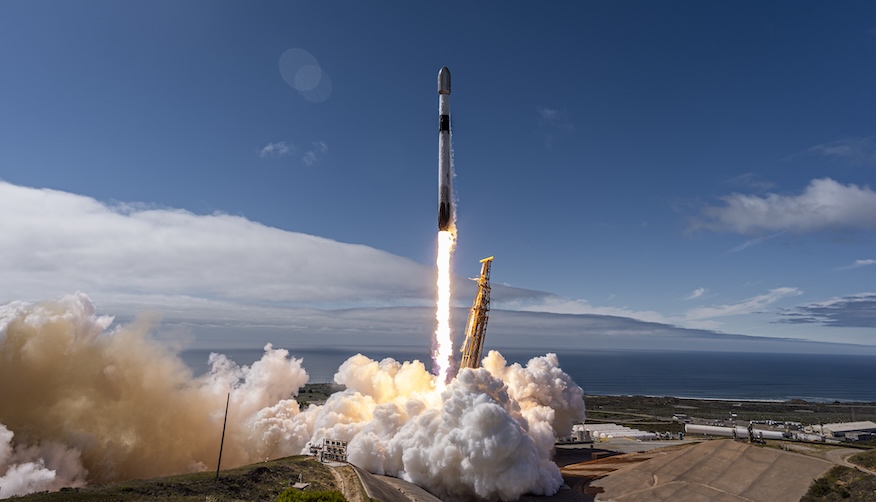
“Goldman Sachs analysts predicted the sector would grow to approximately $1 trillion by 2040, a forecast consistent with projections from Morgan Stanley,” according to the U.S. Chamber of Commerce.
The space economy’s projected growth is driven by both declining launch costs and a rising demand for satellite services and space vehicles. This dynamic reflects a recurring pattern in economic history, which has catalyzed technological revolutions before; our current moment resembles the first Industrial Revolution, when industry faced surging demand for goods that were difficult and expensive to produce. Then, it was better textiles and raw materials in the 1800s. Today, it’s satellite infrastructure and space vehicles. When industries rose to meet those demands, the results were transformative, and there is no compelling reason our era should be any different. In short, we may be standing at the threshold of a new revolution.
However, it’s clear that the first Industrial Revolution was not without its costs, such as displacement, exploitation, and environmental degradation. Yet its long-term contributions to human progress are undeniable. The craftsmen and laborers displaced by mechanization gave way, over generations, to surgeons and engineers. A similar transition may lie ahead. New industries will inevitably disrupt existing labor markets, pressuring workers to develop new skills. This pressure reflects something fundamental about human nature: our drive to push boundaries, solve problems, and build on what came before — a cycle that shows no signs of stopping.
In the Industrial Revolution, business expansion followed a clear chain: access to machinery required capital, capital came from investment, and investment took the form of joint-stock companies and reinvested profits. The formula worked, but not without moral compromise. Prosperity was unevenly distributed, and poverty persisted beneath the surface of progress.
The same question now confronts prospective investors in the space economy. Participation in this emerging sector offers the potential for significant economic returns, but it also risks perpetuating familiar harms: health risks to workers, environmental damage, and the overall worsening of social inequality. History is clear on the consequences of ignoring these concerns, as workers in the first Industrial Revolution paid with their health, their autonomy, and in many cases, their lives.
This brings us to the central ethical question: Is it justifiable to invest in an industrial revolution, knowing what revolutions cost?






Tom • May 1, 2026 at 11:45 PM
I have questions. Who regulates space? Is space only for riches who can afford the projects? The knowledge and and the benefit of space explorations be shared with everyone on earth?
Amelie • Sep 19, 2026 at 9:39 PM
Thank you for your questions Tom! Space isn’t specifically regulated by a person, company, or country; it’s much like the Earth isn’t regulated by one single entity. Space exploration is very expensive. Since it is dominated by wealthy countries and companies, it raises the question of an economic inequality. The last question is subjective. In my opinion, sharing information on space research could benefit humanity and our future. People might argue that it would have negative benefits like the ones I’ve mentioned in the article.