On a 20-metre track, a car no bigger than an iPad crosses the finish line in barely a second. For the six students of Recolle Team Hayate, getting it there took almost a year.
STEM Racing, a global competition supported by Formula 1, has student teams design, build, and race miniature CO2-powered cars down a straight track. But speed is only part of the score. Teams are also judged on a portfolio documenting their prototypes and simulations, an enterprise portfolio covering sponsorships, marketing, and social impact, a full exhibition booth, and a 10-minute presentation to a panel of judges.
“It’s difficult to explain,” admitted team manager Rion Soback.
Building the Team
Team Hayate was born in November 2025, when Soback and design engineer Kosuke Nakatani returned from the previous year’s World Finals. Their old team had been split between Japan and Thailand, and this time they wanted everyone in one place. Rather than advertise, they emailed a select few students directly, held interviews, and spent weeks thinking through how each personality and skill set would fit.
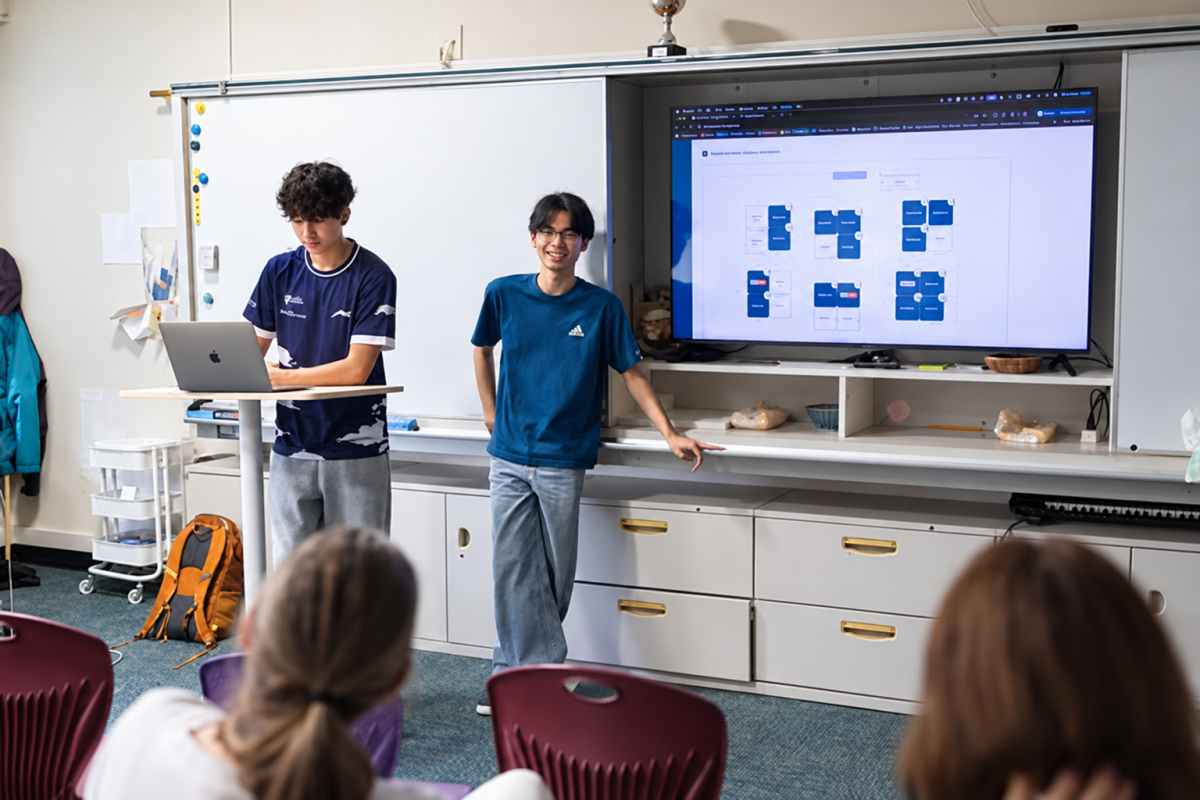
Each of the six members is in charge of their own parts. Nakatani designs the car on the computer, and manufacturing engineer Shunki Murakami turns it into a physical car, mostly through CNC milling, lathing, and SLS printing. CSR manager Eisuke Kitani runs events, cultural partnerships, and social responsibility projects. Brand manager Jesse de Ronde handles the brand from social media to the team’s uniforms, and enterprise manager Len Motoki brings in sponsors. Soback ties it all together as the team’s all-rounder, stepping in wherever help is needed.
The new members may not have known what they were signing up for. The commitment ran 10 to 20 hours a week, and closer to 30 in the final stretch. “I think there were times when I saw them more than my family,” Soback said.
Nobody forced them to do it, either. Team Hayate isn’t affiliated with the school, and for Soback, that’s exactly what made it special. “Everyone there is just doing it because they want to do it,” he said.
Designing a Car
Before Nakatani draws a single curve, he does the math. The team built a mathematical model of the car, factoring in drag and rolling resistance, and used it to create a calculator that predicts race times. Test rigs measured how each component, and even the car’s centre of mass, changed its speed. Only then did sketches become adjustable 3D models, simulated and refined over dozens of versions.
Each choice affects the next. “If we change one wing by one millimetre, then it affects the entire car,” Nakatani explained. With no single right design, the freedom can be overwhelming, but watching the car tear down the track makes up for it. He compares the feeling to holding his own baby.
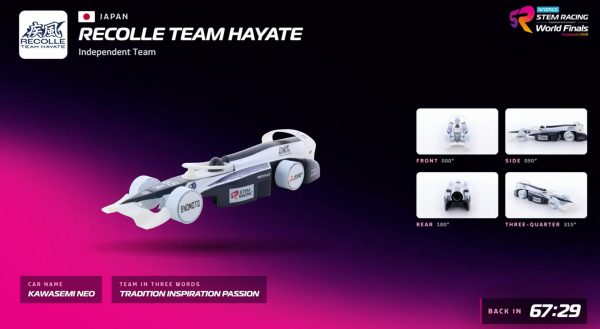
The Road to Nationals
The first prototype arrived in December, after Soback and Murakami spent three days of Christmas week working from 10 a.m. to 8 p.m. That same month, Motoki signed the team’s first major sponsor. In February, Team Hayate hosted its first event, drawing around 100 participants. In March, STEM Racing Japan gave Soback and Nakatani staff access passes to the Japanese Grand Prix at Suzuka, where they stepped inside Aston Martin’s garage and met its engineers. By May, with portfolios for Nationals due, 30-hour workweeks had become normal.
Their hard work paid off in June. Only nine teams competed in the national finals, yet camera crews from Japanese television—including Asahi, Fuji, and TBS—showed up anyway, capturing the moment Team Hayate walked away with 8 of 12 awards.
The win opened doors that few high schoolers ever get to walk through. Partnerships followed with ANA, Honda, and Recolle, the team hosted an event with Rohto, and Mitsubishi helped manufacture the car.
World Finals in Singapore
From day one, the team had its eyes on a top-three finish at the World Finals in Singapore, up against powerhouses like Saudi Arabia, Germany, and the United Kingdom.
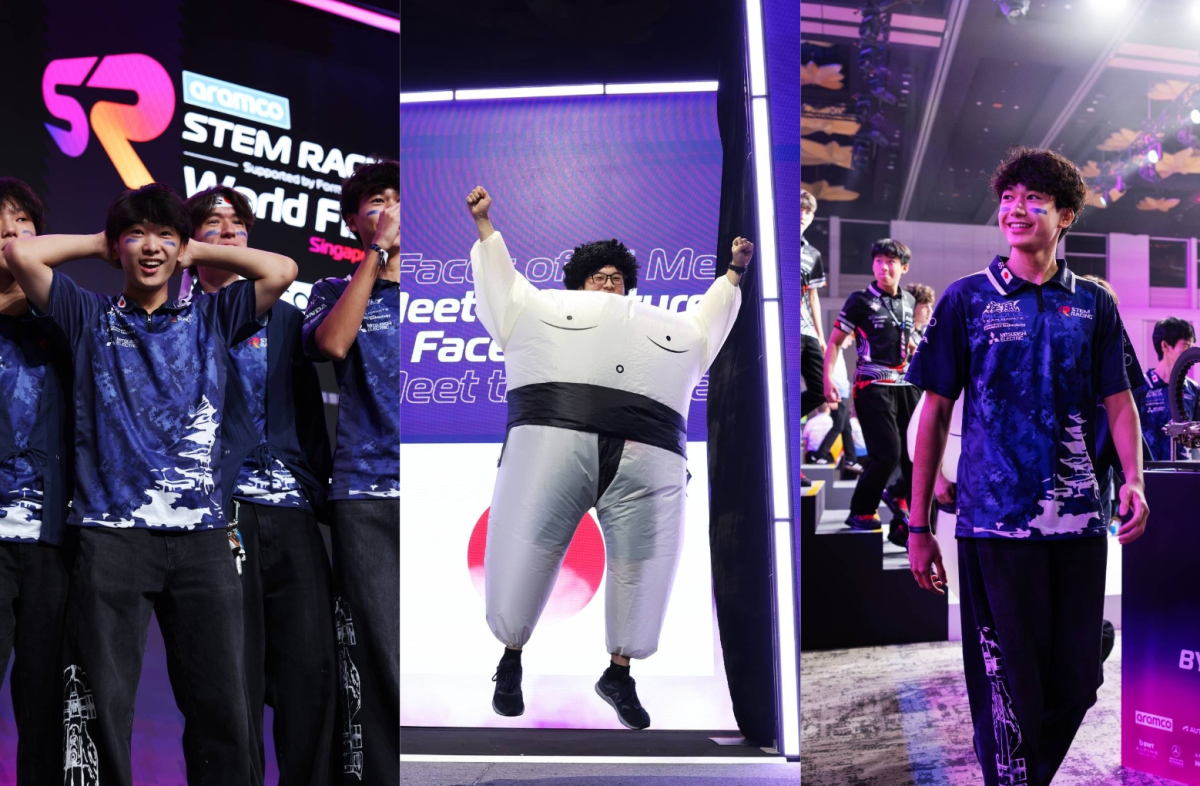
Their week was brutal with four days of little sleep and nonstop work, though the team did get to walk the pit lane at the Singapore Grand Prix. By changing their mascot from a kawasemi (King Fisher) to a sumo wrestler, the team proudly displayed their Japanese pride whilst showcasing their hard efforts. When the results came in, Team Hayate had placed 33rd.
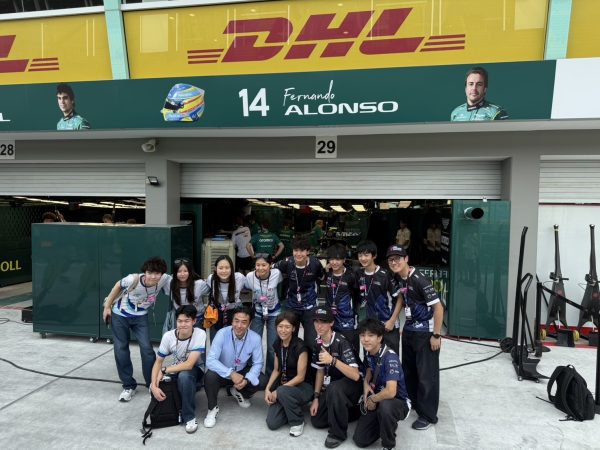
“I was sad at first,” Soback admitted. “But then, when you look at the 32 teams in front of us, you could tell that they were good.”
Nakatani acknowledged that the results stung, but for a first-year team from a country still new to the competition, he thinks they held their own. Now the goal is to lay the foundation for the next generation of Team Hayate to build on. And for Motoki, the hardest week of the year was worth every second: “We were really united as a team.”
What Stays
Ask them to describe STEM Racing in three words, and the answers overlap more than they differ. Soback says unique, fun, and life-changing; Motoki says hard, fun, and rewarding; Nakatani goes with global, innovative, and multidisciplinary.
What they carry forward is more personal. Motoki only has to open his old slideshows and finance reports to see how far he’s come. Soback learned how to stand in front of adults and convince them to believe in a group of teenagers.
Team Hayate is recruiting again, and Nakatani’s pitch is aimed at anyone who wants “to feel like you’re actually on an F1 team!”
Soback, thinking back to the student he was before all of this, has one piece of advice for whoever joins next: “Just don’t be afraid to try something that no other team has tried.”