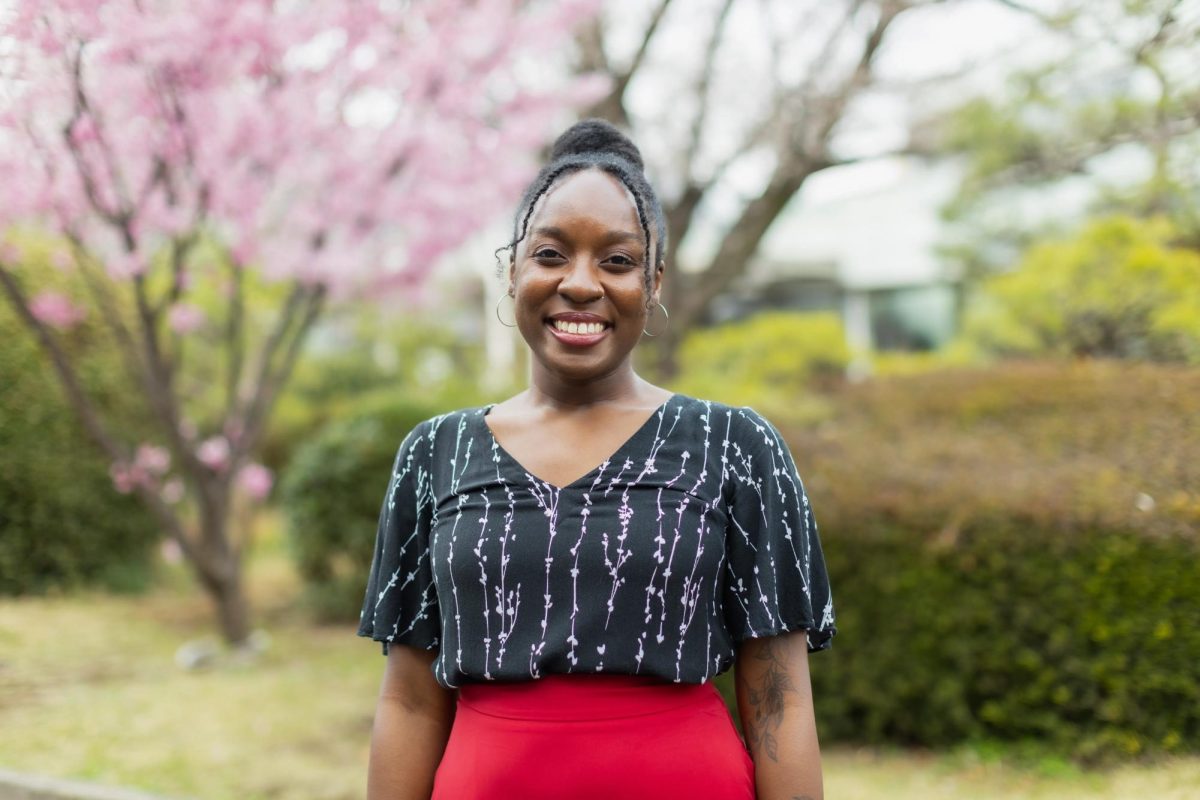
Ms. Callender has been singing in choir since elementary school, and unlike most childhood hobbies, it never really faded. Teaching was her other longtime passion, so becoming a choir teacher felt like “a natural combination of the two things I [she] was most passionate about.” But at ASIJ, where she teaches middle and high school choir, she has found that helping students sing sometimes begins with being willing to embarrass herself.
The weirdest person in the room
Sixth graders, she has noticed, will sing almost anything at full volume. A few years later, those same students can become much more conscious of what their classmates think. To help them get past that hesitation, she tries to be the first person willing to look silly during choir practice.
“If I’m the weirdest person in the room, I feel like my students feel more comfortable being themselves,” she said.
Her approach goes beyond making students laugh. She pays close attention to how students interact, stepping in when someone says or does something that could be perceived as rude or disrespectful. She wants rehearsals to be a place where students can feel comfortable taking risks and making mistakes.
Much of that work is invisible to an audience. Callender teaches six ensembles of at least 25 students each, and a concert involves coordinating rehearsals, costumes, song lists, and communication with parents and staff. All the while, she is thinking about the relationships among the students in front of her.
“I’m an event planner and an administrator and a social-emotional health person,” she said. “There’s a lot of stuff going on in my head that nobody sees. But I hope if I’m good at my job, people think, ‘Wow, choir looks great.’”
With students arriving at and leaving ASIJ each year, maintaining that sense of community can be difficult. She makes a point of reminding those who move away that they will always be part of the ASIJ choir, and that they are just spreading their voices across the globe.
“It’s kind of special,” she said, “because we have community members who are all over the world now.”
A choir for the adults
Callender brings that same approach to the community choir she started for adults on campus. She expected mostly teachers and their partners. Instead, staff members from finance, admissions, learning support, and other parts of the school began showing up.
Some had grown up singing in choirs and longed for another opportunity to do so. Others had always wanted to try. Some had even been discouraged from singing when they were younger, occasionally by teachers who told them they weren’t good enough.
For those members, joining a choir again isn’t just about learning music. It can also mean rebuilding the confidence to sing in front of other people.
“There are actually a lot of people in community choir who are in it as a way to try to heal that part of themselves,” she said.
Bruce Akazawa, who works at the guard booth, is also a member. Sometimes, when he’s playing music at work, it’s one of the choir’s practice tracks.
For Callender, moments like that show how the group has become part of people’s lives beyond rehearsal. Colleagues who might rarely cross paths now have a reason to sing together.
“I’m really grateful that we have them,” she said.
Braver than it looks
When asked about students she is proud of, Callender thinks of those who were not sure they belonged in choir at all. One student joined concert choir without previous singing experience or voice lessons. At first, the student barely sang or participated. The next year, that same student joined Chamber Singers.
She values that kind of growth more than a flawless rehearsal. In fact, she sees imperfect rehearsals as necessary.
“There’s never a perfect rehearsal, and that’s kind of what rehearsal is. We want all the imperfections to come out so we can fix them.”
Earlier in her career, a difficult rehearsal might have felt like a failure. Now, it helps her recognize what students need and what she should teach differently.
She also wishes more people understood how vulnerable singing can feel. Band and orchestra students have instruments in front of them. Choir students stand onstage with only their voices, and criticism can feel personal.
“If people don’t like your voice, it almost feels like they don’t like you,” she said.
For students already worried about what others think, performing becomes a significant challenge. “A lot of students are being incredibly brave by singing in choir.”
One song
If she could get the entire school to sing one thing, Callender would choose Tshela Moya, a traditional South African song arranged by South African composer Michael Barrett. Although it originated as a religious song, she explained that it is also sung to bring people together.
ASIJ’s choir has performed the piece before. This year’s seniors sang it as freshmen, while this year’s freshmen sang it in sixth grade. It’s back on the program this year, with parents invited to join students and teachers onstage.
It is the same idea behind her classroom antics and her community choir: singing should bring people in, not make them afraid to participate. And she would love to take it one step further.
“If I had it my way, everybody on campus would learn this song, and we’d all get together in one big lump and sing together.”