
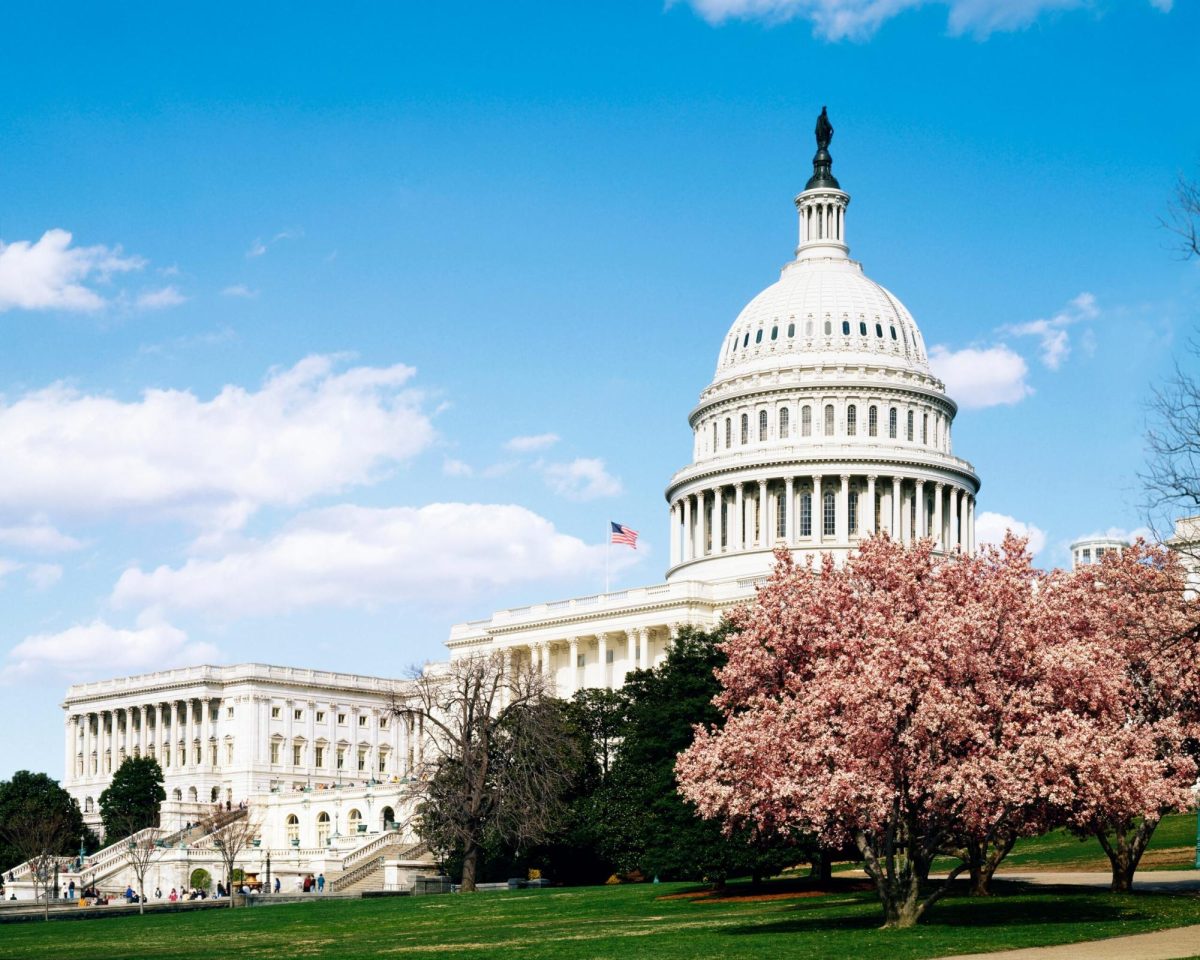
In the United States, midterm elections are held in the middle of a president’s four-year term, putting every seat in the House of Representatives and about one-third of those in the Senate up for election. The outcome of the midterms heavily influences how easy it is for the president’s administration to enact legislation, and it also serves as a gauge of voter sentiment towards the current administration. Control of Congress is often decided by only a small fraction of “competitive” races, as the vast majority of seats are seen safe formalities for one party or the other.
For the first portion of the Trump presidency, Republicans held what is known as a government trifecta — control over both chambers of Congress (the House of Representatives and the Senate) and the White House. But many believed that would change with the 2026 midterm elections and for Democrats to gain seats.
The current political climate is extremely unfavorable towards the Trump administration, as many voters are discontented with his cabinet’s performance, particularly economically. For many Americans, the Iran War and Trump’s tariffs on foreign goods have increased the cost of living and worsened their financial situation. As a result, Trump’s approval rating has been rapidly declining, now falling to around 30–40%. Reversing these effects and prioritizing affordability were therefore common themes in the campaigns of many Democratic candidates.
Prior to the election, many believed that flipping the House (i.e. the minority party winning a majority of seats) was likely to happen for Democrats. However, flipping the Senate was considered a more difficult task. Republicans had a 53-47 majority, so Democrats would need a net gain of 4 seats to attain a majority. Republicans had a much more favorable battleground, holding 22 of the 35 Senate seats up for reelection, while Democrats held only 13.
Yet in the days before the election, polls for both chambers of Congress were very encouraging for Democrats, as in a majority of swing states (states in which Republican and Democratic candidates have similar levels of support), Democrats were all polling higher than their Republican opponents, albeit by small margins. But there was also some skepticism about the accuracy of polling. Many conservatives, particularly those on the far right, are relatively unlikely to respond to polls; in addition, Trump has been noted for his ability to draw disaffected Americans out to vote on election day, all of which could turn the tide against Democrats.
Come election day, results turned out to be even more positive than expected for Democrats, who gained majorities in both the House and the Senate.
In the House of Representatives, Democrats flipped many seats in key races across the country, winning the largest popular-vote victory for the House since 1976. As of now, they hold 253 seats, a net gain of 30. In addition, some races have not been called yet, meaning Democrats could add even more seats to this tally.
In the Senate, Democrats held all their current seats in swing states such as Michigan and Georgia and also flipped 7 seats from Republican control. Democrats scored many wins in historically conservative districts: James Talarico (Texas) and Adam Hamilton (Kansas) are the first Democrats in 32 and 94 years, respectively, to be elected to the US Senate in their states. Another major achievement for Democrats includes the election of Troy Jackson (Maine), who unseated the 30-year incumbent Susan Collins. Progressive Democrat Abdul El-Sayed (Michigan) will also become the first Muslim senator in the US in a competitive election that many critics are using as a test of whether left-leaning policies can garner votes in swing states.
It was a somber night for many Republicans. President Trump spoke to the media on election night, explaining he would accept the results and is prepared to work with Democrats. However, he also emphasized the president’s ability to “veto”, which grants Trump a degree of power to block legislation passed through Congress.
As of now, the results of several congressional races remain undetermined: around 30 House races and the two Senate races have not been called. Some of these elections have incredibly tight margins, such as the Mississippi Senate race, which is separated by approximately 1,800 votes. As votes are still being counted, it could take days or even weeks for the results of these elections to be decided.
Ultimately, the 2026 midterm elections represent a significant victory for the Democratic Party, marking a major shift in the balance of power in government. Democrats will now have greater influence over legislative decisions, but with Trump retaining the presidency, the results of this election could signal the beginning of a contentious second half of Trump’s term.