
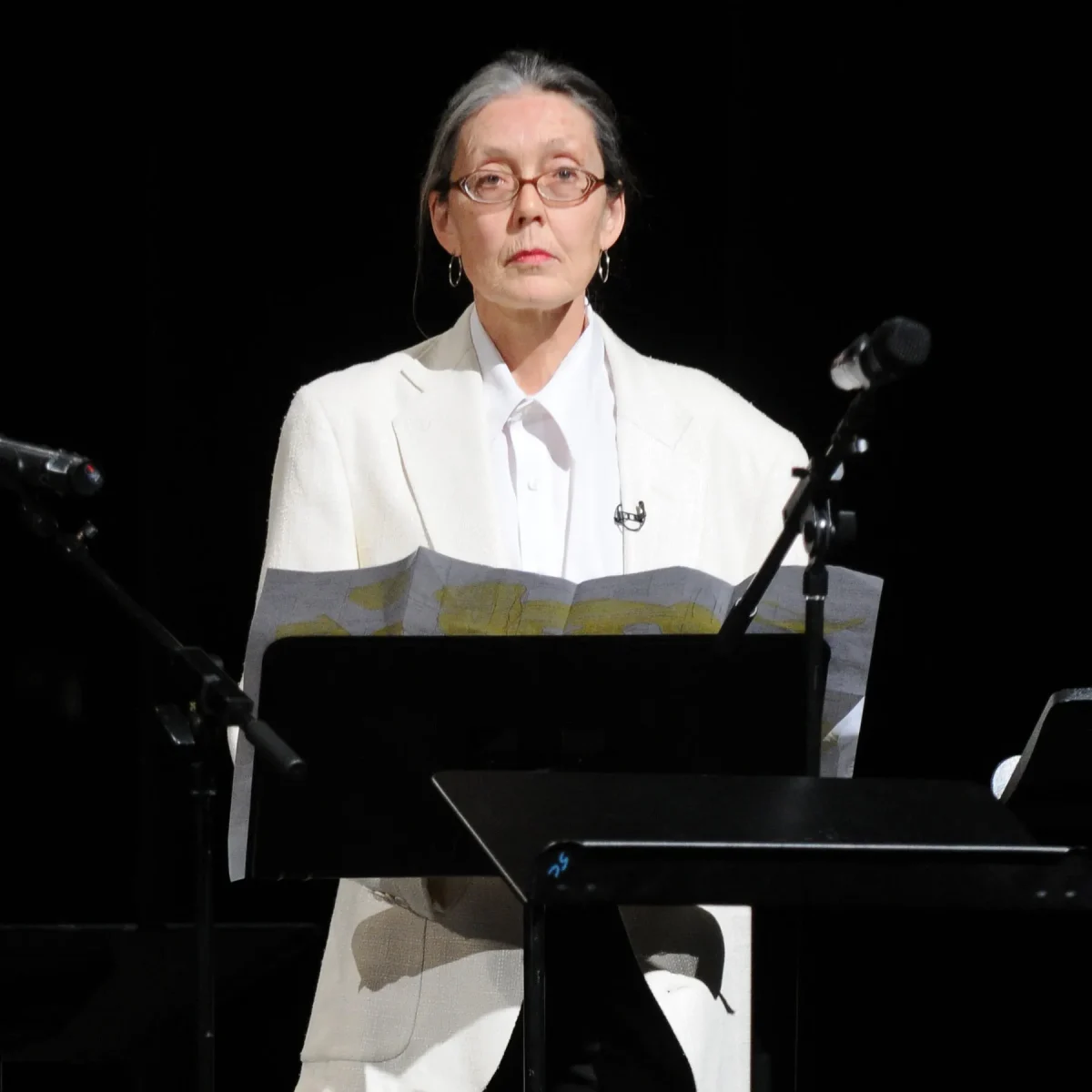
When the Swedish Academy tried to tell Anne Carson she had won the world’s most prestigious literary prize, she didn’t pick up. Carson at first ignored the Academy’s repeated phone calls, and her husband convinced her to call back. When Permanent Secretary Ingrid Carlberg finally reached her, all Carson had time to say was that she was in Iceland, listening to the wind.
It was a fitting introduction to one of literature’s most unusual figures. On 8 October 2026, the Academy named the 76-year-old Canadian the year’s laureate, honoring her “bold and inventive oeuvre.” In its official citation, the Academy credited her with inventing new forms for modern literature through a playful engagement with the classics.
From Lessons to the Lecture Hall
Anne Carson was born on 21 June 1950 in Toronto, Canada. Her lifelong obsession began in an ordinary place: she first encountered ancient Greek through her Latin teacher, who introduced her to the language during lunch breaks at secondary school.
The early spark grew into a serious relationship. She studied Classics at the University of Toronto, earning her BA in 1974, MA in 1975, and PhD in 1981, along with a diploma in classics from the University of St Andrews in Scotland in 1976. Her dissertation carried a title borrowed from the Roman poet Catullus: “Odi et Amo Ergo Sum”—“I Hate and I Love, Therefore I am.”
For decades, she paired writing with teaching. She joined McGill University’s Department of Classics in 1988 and left in 2002 and has also taught at universities including Princeton, Emory, and the University of California, Berkeley. Notoriously private, Carson has seen her profile grow over four decades, while the details of her personal life remain elusive.
Reactions from “Crazy” to “Proud”
Carson herself seemed bemused. She told Icelandic broadcaster RUV she thought the Academy members were “all crazy.” When asked whether the prize might change her readership, she held tightly to her cap in the wind and replied: “I’ll get a sticker for the front of my books.”
Canadian Prime Minister Mark Carney said she had brought ancient stories to new audiences and transformed how we think about literature, calling the award a “proud moment for Canada.” Novelist Margaret Atwood recommended The Beauty of the Husband or Men in the Off Hours to new readers.
A Writer Who Refuses Categories
Carson’s books are hard to put into one category. She is known for her experimental writing that dismantles the boundaries among poetry, fiction, essays, translation, and scholarship.
At the heart of her writing is a conversation with the ancient world. Her breakthrough, Autobiography of Red, reimagines the Greek myth of Herakles and the red-winged monster Greyon as a story of teenage heartbreak. Its sequel, Red Doc>, follows the two into adulthood, and it won the Griffith Poetry Prize in 2024. Her most personal book, Nox, was written in memory of her brother Michael. Rather than following the frame of a conventional book, it takes the form of a box containing an accordion fold-out of pictures, letters, and other writings dedicated to him, and includes Carson’s translation of an elegy by Catullus for his own brother.
Carson is also a celebrated translator of Sappho, Sophocles, and Euripides; the Swedish Academy said her translations “may be regarded as independent works in their own right.”
A History of the Prize
The Nobel Prize in Literature traces back to the will of Swedish inventor Alfred Nobel. In his 1895 will, Nobel entrusted the Swedish Academy with selecting the laureate, instructing that the prize shall go to the person who had produced “the most outstanding work in an ideal direction.”
The first prize was awarded in 1901 to the French poet Sully Prudhomme—a choice that sparked controversy from the start, as he won over Russian author Leo Tolstoy, a decision that caused contention in some literary circles. The selection process remains secretive: around 300 nominations are typically received each year, and self-nomination is not allowed. Nominations have been kept secret for fifty years.
The prize is accompanied by 12 million Swedish kronor (about $1.2 million). Carson will receive the award from King Carl XVI Gustaf in Stockholm on December 10, the anniversary of Alfred Nobel’s death.
For a writer who spent half a century making two-thousand-year-old voices sound startlingly new, the honor of the prize confirms what many readers already knew: the ancient world, in Carson’s hands, has never felt more alive.