“It’s a violation of International Law.”
I recall saying this once, only to be met with the usual answer that follows: “So what?”
At that time, I pushed back and argued: “The President of the United States just violated multiple international laws by going into Venezuela and capturing their president, and some view it as a trial to his later aggression to create conflict with Iran. There’s no possible way we let this slide, right?”
The response was always the same: “The UN doesn’t have any real power. What can we actually do?”
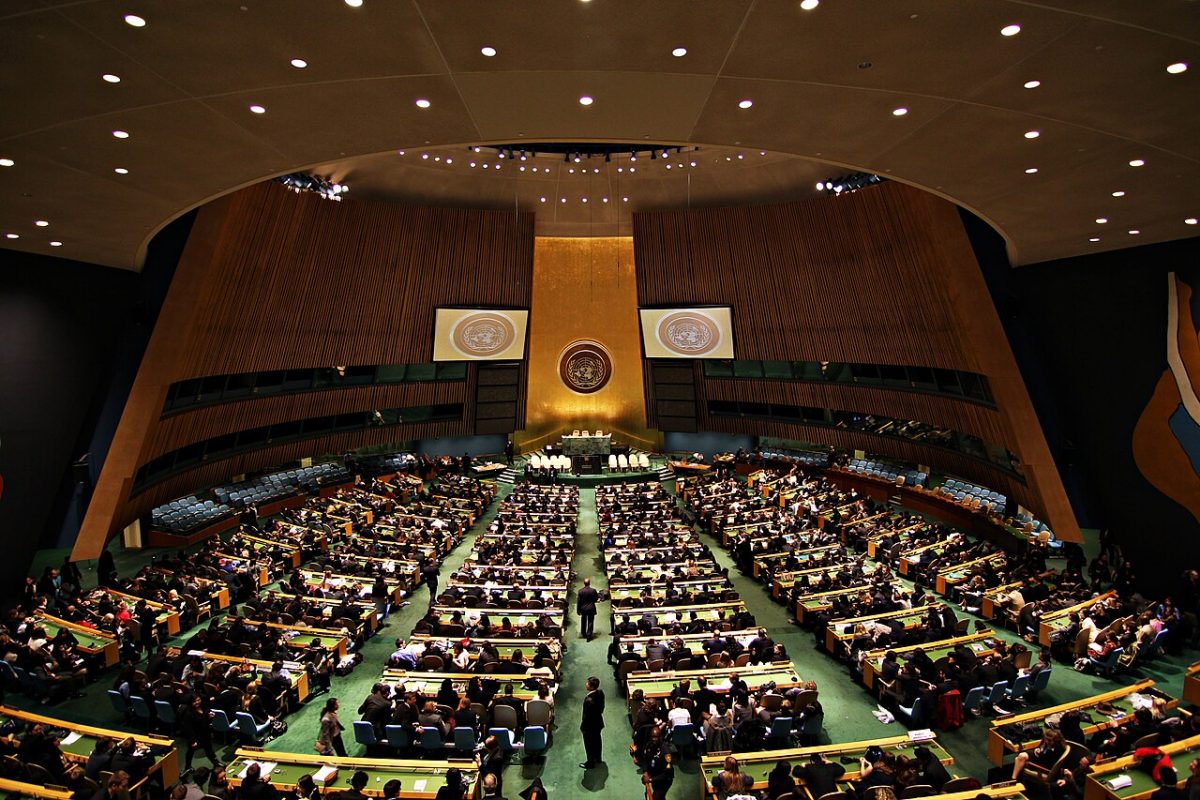
Since its creation on October 24, 1945, the United Nations has served as a platform for communication, humanitarian aid, conflict resolution, and diplomacy among its 193 sovereign member states and two permanent observer states: the Holy See (Vatican City) and Palestine. It was built on the foundation of the UN Charter. The UN Charter is the “rulebook” for the world, which requires all member states to work together to stop wars and protect human rights, widely considered as the cornerstone of international law.
But truth be told, the world is currently defined by humanitarian crises that this charter has failed to resolve.
Sudan is now in its fourth year of civil war, with reports highlighting ethnic-based executions, widespread sexual violence, and a man-made famine. Gaza and the occupied Palestinian Territory face the deliberate deprivation of survival essentials (water, food, medicine), attacks on hospitals, and unlawful displacement. Afghanistan faces the systematic repression of women and girls by the Taliban, including their total removal from the judiciary and education. In Myanmar, there are ongoing state-led mass killings targeting the Rohingya and other ethnic minorities. The Democratic Republic of the Congo (DRC), despite a 2025 peace deal, experienced renewed fighting and forced labor in mines exploited by armed groups. In Haiti, nearly all of the capital is controlled by armed gangs, who use systematic sexual violence and the forced recruitment of children – estimated to make up half of all gang members – to maintain their power.
Seeing this, I began to accept the possibility that the UN truly had no power. For if we can’t save the children being killed every single day, what’s the point? It is a crushing realization that leads many to believe the organization is obsolete.
However, if we abandon the UN, we are accepting a world where leaders and presidents exist without a conscience. Hence the famous sentiment. “If the UN didn’t exist, we would have to invent it.”
The purpose of the UN right now isn’t to be a world police force or the bringer of justice we wish to see in the world. That expectation was never realistic to begin with. The UN was not designed to overpower nations, but to bring them into the same room – to force acknowledgement, and to create a shared standard of what is right and what is wrong.
The UN serves as the place where we are forced to confront the horrors together. It gives us the language to call something a war crime, a genocide, a violation of international law, and that matters more than we think. Without it, the world’s most powerful states would never have to answer to shared universal principles; their actions would go not only unpunished, but unquestioned. So when people ask, “What can the UN actually do?” The answer isn’t to stop every war or save every life. Its role is to provide a collective legal and ethical framework that forces states to confront standards larger than their own strategic interests. It ensures that even when the world fails, we still agree that it has failed.
And in a world where even that agreement is beginning to fracture, that may be the most important role of all.