Singer, songwriter, actress, mogul, philanthropist—Dolly Parton did all of it for almost seven decades, without ever stopping being the generous and unmistakably authentic person that she was. And on August 25, 2026, Parton died at the age of 80 after a brief battle with cancer. Her death marks the end of one of the most recognizable careers in American popular culture.
From Tennessee to Nashville
Dolly Rebecca Parton was born on January 19, 1946, in Sevier County, Tennessee, the fourth of twelve children in a family with little money. Her father farmed tobacco and never learned to read or write; her mother was a singer who passed down church hymns and old Appalachian ballads, and music remained a constant throughout her childhood. From a young age, Dolly performed on local radio and television programs, and at 13, she appeared at the Grand Ole Opry, the legendary Nashville country-music venue and radio station that has hosted generations of major country performers.
The day after graduating from high school, Parton moved to Nashville. She initially established herself as a songwriter, writing songs for other performers before releasing her own debut album, Hello, I’m Dolly, in 1967. Her career gained momentum after she joined Porter Wagoner’s television show; Wagoner was a prominent country singer and television host who helped introduce Parton to a national audience. She eventually struck out as a solo artist, beginning one of the most successful careers in country music. Around this same time, she married Carl Dean, a private, low-profile partner who stayed by her side for nearly 60 years, until his passing in 2025.
Parton quickly proved that she was no ordinary performer. Turning everyday experiences into extraordinary stories, it was evident that she was a prolific songwriter, penning roughly 3,000 songs throughout her lifetime. Tracks such as “Jolene,” “Coat of Many Colours,” and “I Will Always Love You” became defining works of her career—the latter becoming an international hit decades later when Whitney Houston recorded it for The Bodyguard, an iconic 1992 thriller romance.
Building Her Empire
Parton’s success eventually extended well beyond the genre of country music. Her 1980 film debut in 9 to 5 introduced her to an even wider audience, and she went on to appear in films including Steel Magnolias and Rhinestone, all while continuing to release music and write songs for herself and other artists.
That ability to move fluidly between industries became one of the defining features in her career. In 1986, she became co-owner of an amusement park in Pigeon Forge, Tennessee, renaming it Dollywood and transforming it into a major attraction—and a significant cornerstone of her hometown’s economy.
A Legacy Beyond Music
Parton’s influence, however, cannot be measured by record sales or awards alone.
In 1995, she founded the Imagination Library, a literacy program inspired directly by her father’s inability to read. What initially began as providing free books to children in her home county grew into a global initiative, sending free books to children from birth to age five, regardless of their family’s income. By 2025, the program had gifted more than 300 million books; one of the clearest examples of how Parton channeled her success into the very poverty and lack of opportunity she herself had once lived through.
Her philanthropy extended well beyond the Imagination Library as well. After wildfires devastated parts of Tennessee in 2016, Parton established the My People Fund, giving displaced families $1,000 a month for five months, then surprising all nearly 900 of them with a final $5000 payment. Just four years later, during the COVID-19 pandemic, Parton donated $1 million to Vanderbilt University Medical Center’s research efforts, funding and supporting work that contributed to the development of the Moderna vaccine.
An Icon in Full
Dolly Parton became one of the best-selling female artists in music history, selling more than 100 million records worldwide. She won 11 Grammy Awards, including a Lifetime Achievement Award, along with honors spanning music, film, and the arts.
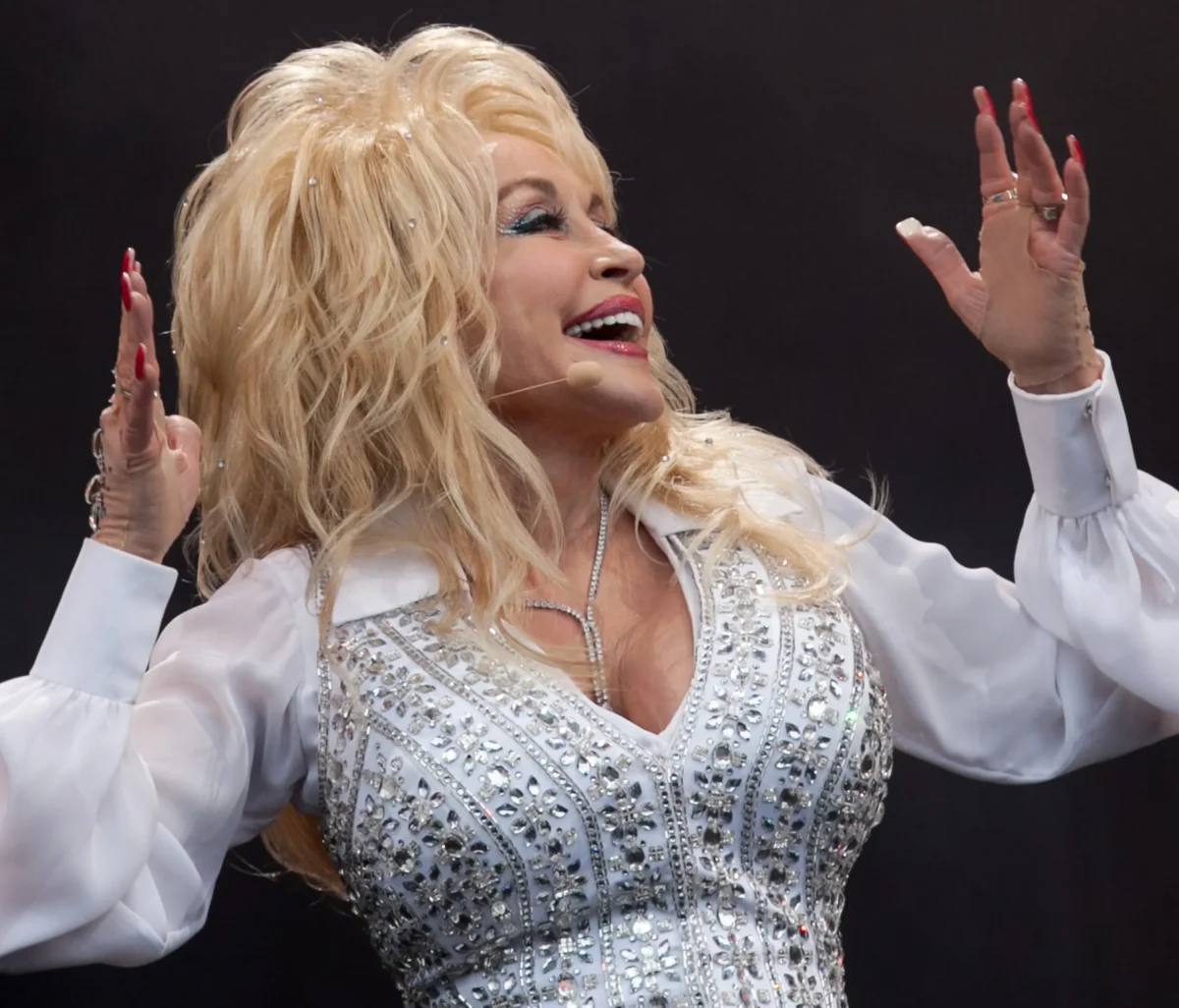
Her look was just as unmistakable as her sound. Her towering blonde hair, her rhinestone-covered clothing, and her deliberately glamorous lifestyle became inseparable from her public image. And rather than letting that image typecast her, Parton turned it to her advantage with humor and complete self-awareness, turning what might have been a negative stereotype into one of the most iconic personas in entertainment. Her ability to be both larger-than-life and deeply grounded became part of what made her so difficult to imitate.
A Career Without an Era
Parton never really settled into a single era. She continued recording, performing, and collaborating across generations, remaining relevant long after the period that first made her famous. Her music moved easily between country, pop, bluegrass, and gospel, creating an inimitable career that refused to fit neatly into one genre or generation. At the same time, her work in film, television, and business carried her name to audiences who might never have listened to a country record.
For nearly seven decades, Dolly Parton built a career entirely on her own terms— growing up in a low-income family in East Tennessee and becoming one of the most successful entertainers in the world without ever treating her origins as something to leave behind. That may be the most lasting part of her legacy: not simply that she became famous, but that she remained unmistakably herself through the process.
There will be other country singers; there will be other actresses, songwriters, and philanthropists; but there will never be another Dolly Parton.