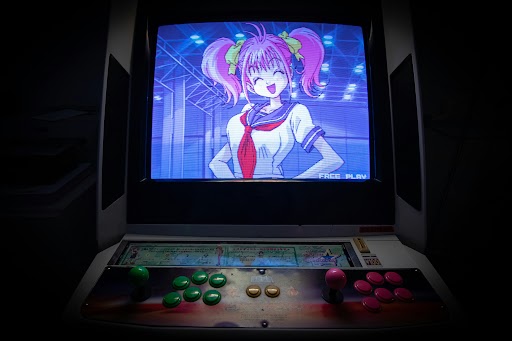
Although it may have started as an entertainment industry popular only in Japanese culture, anime has recently gone off the charts. With the most popular anime films like One Piece and Naruto becoming as common references as classic American shows such as Friends, is anime an industry that Japanese citizens can be so confidently proud of?
“No, not at all. It’s embarrassing how we [Japan] continuously profit from anime despite the obvious setbacks it causes to women,” claims Hiyori, a 17-year-old high school senior.
She’s right. Anime isn’t merely a Japanese media form anymore; it has undeniably evolved, creating a culture where women are portrayed for a heavily male-leaning audience, with deliberate objectification of women’s bodies and even personalities seen on the production end. As Dr. Patrick W. Galbraith, associate professor at the School of International Communication at Senshu University, stated, “The production side [of anime] has been heavily tilted towards men since its early formation.”
So, when exactly did this “early formation” begin?
Background to Japan’s Anime Industry:
To first fully grasp the trends of oversexualization of young women in anime, we must understand how exactly anime became extremely popular in the first place. According to Nippon, Japan began producing animated cartoons in the 1910s, inspired by emerging animation in the United States and France. Yet, with the higher costs and the constant overshadowing by the dominating Disney cartoons, anime wasn’t big to begin with.
Throughout the early 1900s, despite limited resources, anime films were consistently produced, mainly to convey messages of democracy or to serve as military motivational content.
The first classic television anime was finally broadcast on January 1, 1963, called “Tetsuwan Atomu,” or Astro Boy. The show became a huge hit, sparking an anime boom marked by intense competition and new productions.
Now, anime is everywhere. From traditional Japanese cable TV to Netflix, the anime industry has evolved and expanded beyond Japan’s small islands, spreading across the globe.
Yet from somewhere around the time of 1910s anime cartoons to today’s countless anime storylines, a clear flaw has emerged from the anime culture: the blatant objectification of young girls and women.
The Roots Behind the Issue:
In a 2025 study analysis regarding how often sexual objectification of female characters is seen in 30 of the most popular anime series from 2021, the results are astounding. Roughly 72% of episodes featured the “kawaii” (cute) ideal. While many may think it’s merely an aesthetic of innocence and pastels, the kawaii culture in anime goes beyond that; it packages women into an extremely youthful appearance, depicting females as small, helpless, and, worst of all, passive.
Unlike other genres of shows such as drama or comedy, where female love interests can be seen anywhere along the spectrum from classic high school cheerleader to a chief FBI agent, Japanese anime often portrays them as what Japanese culture deems the “ideal woman”: meek, motherly, and overall innocent and virginal. Moreover, young girls in anime don’t merely serve as love interests; that can often become their one and only role. Rather than having an individual storyline and a growing background, the female’s happily-ever-after entails securing external validation, mainly from men.
Furthermore, the many film’s production has become altered for one clear audience: the male gaze. What’s the male gaze? According to EBSCO, the male gaze is a feminist theory that argues media is often produced or filmed from a masculine perspective, homing in on what media producers believe men would most desire to view. In anime, a study found that over half of the episodes aligned with this theory, in which camera shots linger on the female character’s body in ways that don’t enhance the anime’s plot or storyline but rather feed the male fantasy. These are often known as fan service shots.
Lasting Damages:
Japanese anime not only represent their female characters in specific roles or through intentional service shots, but also attach these actions to existing consequences.
Critics have claimed that the culture of anime “is rife with sexist themes,” ranging from extremely sexualised underage female characters to love-obsessed female villain characters. With 60% of 13- to 17-year-olds identifying as anime fans and 30% even stating that it has “influenced their outlook on life,” anime’s concerning themes in female representation are undeniably impacting younger generations.
Evolving Influence:
Anime will continue to be produced in Japan, with its industry consistently reaching all-time highs in the market. However, the lasting damage of the anime industry isn’t confined to anime or Japan. According to FairPlanet, certain commentators argue that the hypersexualization of females in anime has worsened Western fetishization of Asian women. In fact, one study even detected over-representation of diaspora Asian women as victims in violent pornography.
In Japan, the lolicon genre (a genre that sexualises childlike characters) is still allowed to be produced and purchased. Despite global concerns from UN Women, Japan only barred the possession of child pornography in 2014, refusing to expand this criminalization to anime and manga as well.
Anime will continue to evolve in the entertainment industry, both within and beyond Japan. With movies and TV shows being among young children’s and teenagers’ first inspirations, anime products must be reevaluated, especially for producers and directors in charge of it all: what do we want the upcoming generation of adults to value? Appreciate? Embody?