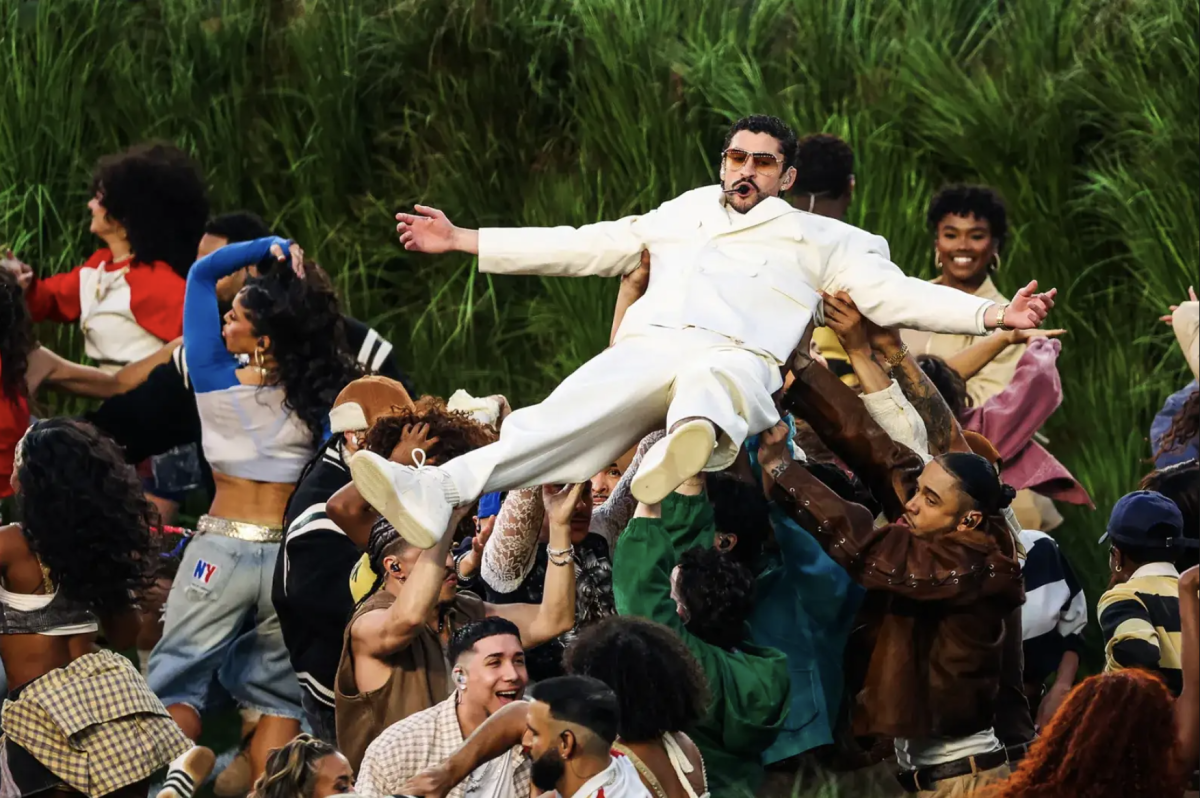
On February 8, 2026, Bad Bunny stood on the Super Bowl LX stage and did something extraordinary. Not only did he deliver a vibrant, unforgettable halftime performance, but he also made history as the first solo Latino artist to headline a Super Bowl halftime show, singing almost entirely in Spanish to a global audience of more than 128 million viewers. His 13-minute set was a cultural statement, featuring scenes inspired by Puerto Rican life and community and dancers carrying flags from across the Americas, altogether celebrating heritage, unity, and joy on one of the world’s most-watched platforms. Audiences saw everyday life woven into the performance—sugar cane fields, food vendors, block-party energy, and personal moments—reminding millions that culture and history are worth celebrating. Surprise appearances from fellow Latino icon Ricky Martin and global pop star Lady Gaga added to the spectacle, bridging generations and genres while reinforcing the show’s message that culture is shared, not siloed.
A Celebration of Identity and Unity
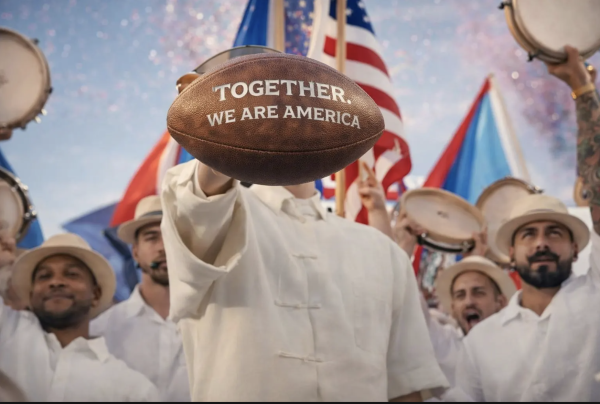
For many, the show wasn’t just music, but a symbolic representation of what it means to belong. Latino communities across the U.S. and around the world expressed pride at seeing their language and culture reflected on such a massive stage — something many said they had never experienced before. One longtime NFL fan said seeing a Latino artist perform in Spanish “at the biggest show in the world was incredible.” Others, including performers and dancers who helped bring the show to life, said they felt empowered and moved watching traditions and cultural references represented so proudly. In moments like the closing message—“Together we are America”—accompanied by a roll call of countries from Central, South, and North America, Bad Bunny communicated a vision of inclusion that resonated deeply with fans.
Joy Meets Politics; But Only for Some People
Bad Bunny’s halftime show was, first and foremost, a celebration of music and culture; it wasn’t designed as a political message. In fact, many commentators noted that it didn’t feel like a protest at all, but rather an invitation to share something heartfelt and meaningful.
Yet in 2026, few cultural events escape the shadows of politics. Current President Donald Trump responded sharply after the show, calling it “absolutely terrible, one of the worst, EVER!” on his social media platform, claiming it was “a slap in the face to our country” and criticising the Spanish language and dancing, even though the performance itself carried no overt political slogans during the broadcast.
Even beyond political leaders who are bound to have personal bias in their arguments, media voices took the vitriol further, not just disagreeing with Bad Bunny’s music but attacking the very idea of his participation. Among the loudest examples was a controversial appearance by journalist Megyn Kelly on Piers Morgan Uncensored. There, she framed the choice of a Spanish-language performance as a deliberate affront, declaring that performing “the whole show in Spanish is a middle finger to the rest of America.” Kelly doubled down with language that crossed into an angry exclusion rant rather than a critique. She argued that the Super Bowl, “a quintessential American event”, shouldn’t be “Spanish” or “Muslim,” and insisted that halftime entertainment should reflect her idea of traditional, English-speaking American culture. She additionally suggested the show was alienating to “the rest of America,” dismissing millions of Spanish speakers as unimportant in the context of this major cultural moment.
While everyone is entitled to an opinion, some of Kelly’s remarks treated culture as a threat to celebration and dismissed the lived experiences of entire communities whose identity was precisely what Bad Bunny’s show sought to uplift. When the conversation shifts from artistic evaluation to suggesting a performance shouldn’t exist because it’s “too Spanish” or seems to only speak to one group, it reveals fear of difference more than anything about the show itself.
A Celebration Worth Defending
At its heart, Bad Bunny’s halftime show was powerful because it was honest, bold, and rooted in human experience. It wasn’t about making a political point. It wasn’t about exclusion. It was about expression. Those who cheered it felt joy and connection. Those who criticised it often revealed fear—fear not of the music, but of a world that looks and sounds different from what they expected.
This moment was more than a performance. It was a reminder that culture—like language—lives in community. We can choose to share it or try to lock it away. Bad Bunny invited millions across the world. And if that makes some uncomfortable, maybe the discomfort reveals something we need to talk about more, not less.