On November 9th, an earthquake of magnitude 6.9 struck the coast of Iwate Prefecture. Northern Japan was impacted by quakes measuring level 4 on the Japanese scale for seismic intensity and received alerts for tsunamis up to 3 meters high, as reported by NBC News and The Japan Times. This served as yet another reminder of the risk associated with living in Japan: an earthquake can strike at any moment. Given the prediction that “there is a 70% possibility of an earthquake directly hitting Tokyo within the next 30 years,” it seems ever more important to be prepared for earthquakes. Thus, in this article, I will outline three key steps to improve our collective readiness for earthquakes.
The first step is making sure the furniture in your home is placed safely. As the Tokyo Prefecture’s Disaster Prevention Information website states, “In recent years, 30-50% of earthquake-related injuries have been caused by furniture falling, tipping over, or moving.” To prevent such injury, the website recommends ensuring there is “a clear path to the door or emergency exit” by arranging furniture so it is kept away from “doorways and hallways.”Additionally, it is essential to secure furniture to stop it from moving or falling over. Other recommendations include attaching furniture to the wall using L-shaped brackets and screws, locking the casters on any furniture that has them, and placing anti-slip mats under furniture that cannot be secured against a wall.
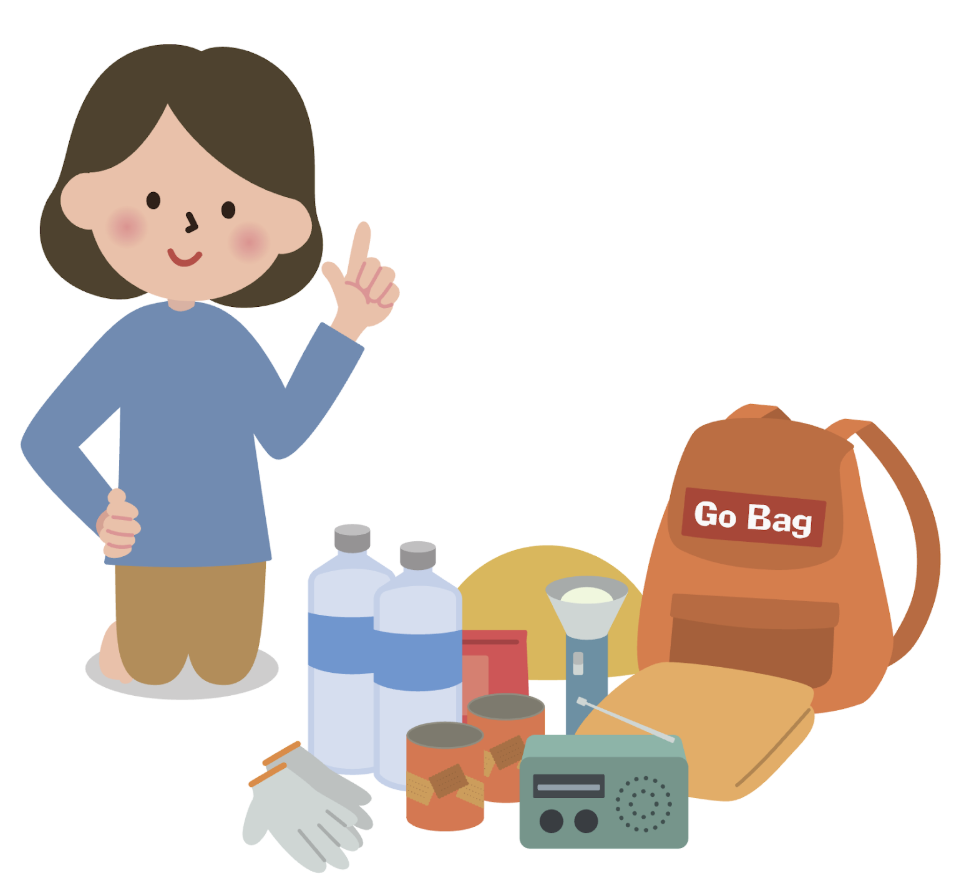
The second step is preparing an emergency bag. Edogawa City’s official website offers recommendations for essential items, including water, ready-to-eat food, gloves, portable toilets, sanitary supplies such as masks and disinfectant, cash, and a first aid kit. A flashlight, radio, and extra batteries are also recommended. The priority, as the site notes, is to pack necessary items in a backpack and keep it in a place where it is easily accessible.
The last step is stockpiling at home. The Tokyo Stockpiling Navi website recommends maintaining a stockpile for approximately seven days, including water (3 liters per day), pre-packaged foods that do not require cooking, sanitizer, face masks, a portable gas stove, gas canisters, a flashlight, a radio, and portable toilets. By answering three simple questions on the website, you can view a list of items they recommend stockpiling. This makes it a great place to start if you are considering stockpiling at home.
Living in Japan comes with the inevitable risks of earthquakes. These are three steps you can take to reduce the risks you face from furniture collapse, home evacuation, or being in a situation where food and water are inaccessible. Although this article discussed the earthquake risks in Japan, natural disasters are not unique to Japan. Wherever we live, it is essential to understand the risks we face and ensure we are prepared if disaster strikes, thereby protecting our lives and property.