
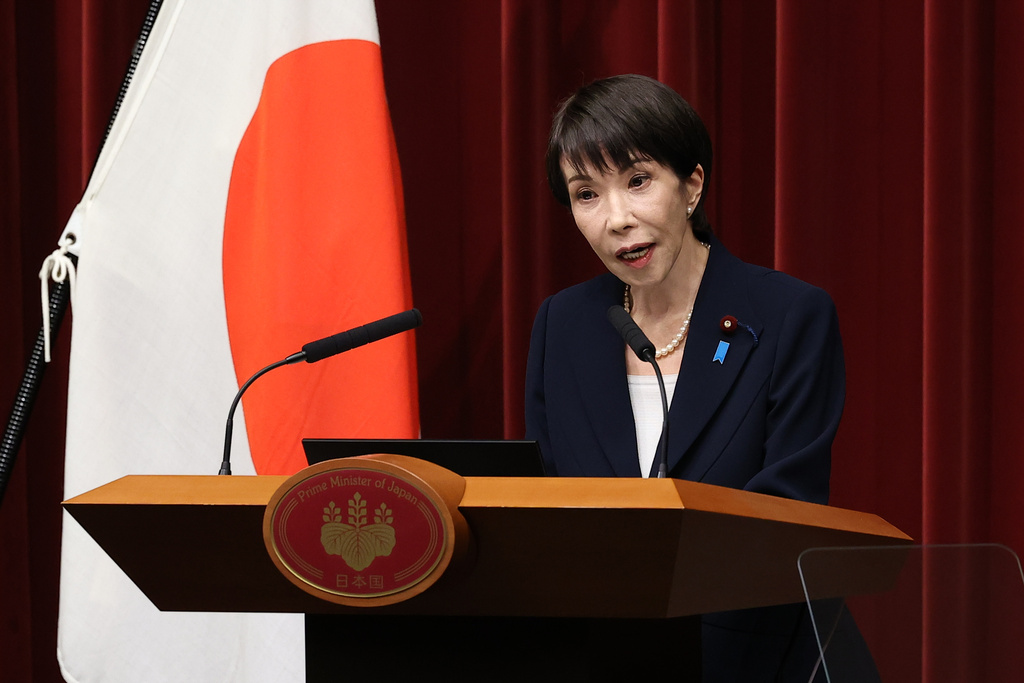
“Why now? It is because I thought that there is only one way forward: to ask you, the Japanese people, with whom sovereign power resides, to decide at this juncture whether Takaichi Sanae should serve as prime minister.”
At a press conference on January 16, 2026, Japanese Prime Minister Sanae Takaichi announced that she would dissolve the Lower House of Japan’s House of Representatives, triggering a snap election just 110 days after becoming the country’s first female prime minister. Having won the Liberal Democratic Party (LDP) leadership election in October 2025 against Shinjiro Koizumi—a Minister of Agriculture, Forestry, and Fisheries from the previous Ishiba government—Takaichi entered office with limited time to consolidate her power in the Diet. By sending voters to the polls early, she gambled that the public would grant her a clear mandate rather than allow her new administration to “drag things along” through Japan’s bureaucratic parliamentary procedures.
That gamble paid off. On February 8, the LDP won 316 of 465 seats in the House of Representatives, up dramatically from 198, securing a rare two-thirds supermajority and marking the first time since World War II that a single party captured more than two-thirds of the Lower House. The result immediately strengthened Takaichi’s leverage in Parliament, leaving opposition parties with little ability to slow her agenda and giving her administration a smoother path to put their conservative agenda into action.
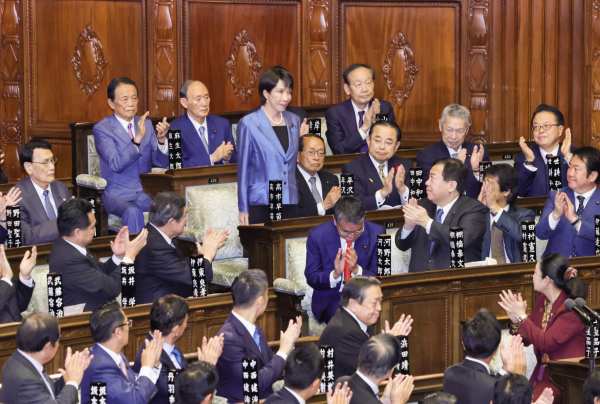
Throughout the campaign, the LDP centered its message on economic stimulus and crisis preparedness, pairing promises of aggressive government spending with a harder-edged approach to national security and social policy. Takaichi argued that Japan could no longer afford incrementalism; accordingly, her government has pushed record fiscal packages, accelerated military spending, and promoted state-led investment in industries such as artificial intelligence and semiconductors. Markets responded quickly to the scale of the mandate, with Japanese stocks jumping after the election as investors anticipated fewer political obstacles to expansionary policies.
Beyond economics, Takaichi’s victory also signals momentum for a tougher stance on immigration and China—two issues that helped define her public image, especially among younger voters who see her as unusually direct and charismatic. The Prime Minister has faced diplomatic and economic blowback from Beijing after publicly suggesting Japan could intervene militarily if China attacked Taiwan. Her supporters argue that this message shows that Japan will not back down under pressure; however, critics worry that such aggressive rhetoric could exacerbate the longstanding regional pressures that exist between the two East Asian powers.

The US also exerted its influence over the election, with President Trump publicly endorsing Takaichi ahead of the vote. The two are expected to meet in Washington in March as she seeks to maintain U.S. security and economic commitments in Asia. With her strengthened domestic position, Takaichi may project greater confidence abroad. Still, analysts, such as Japan Foresight’s Tobias Hariss, have noted that her biggest challenge may come not from Japan’s opposition parties, but from external forces such as financial markets and the rapidly changing dynamics between Washington and Beijing.
At home, the landslide has revived a party that had seemed weakened only a year ago after a series of bruising defeats, despite having governed for the majority of Japan’s post-war history. Yet the scale of the win has also intensified public debate over whether Japan is entering a new era of conservatism. Far-right groups such as Sanseito have gained visibility and have begun pressuring the LDP to move faster on issues like immigration enforcement. Even with a supermajority, the question is not simply what Takaichi can pass, but how she uses the political capital voters have handed her.
Beyond the LDP, the election was also defined by a massive decline in seats for the Centrist Reform Alliance (CRA) parties: the center-left Constitutional Democratic Party, and Komeito, a centrist party that formerly governed in coalition with the LDP. The alliance was formed recently, seeking to combat the LDP’s expanding political influence. Nevertheless, Takaichi’s sway and the LDP’s popularity proved to be an insurmountable challenge for the CRA.
As political disputes between supporters of Japan’s left-wing and supporters of Japan’s conservative movement persist, one thing can be agreed upon: this election is a significant inflection point for the LDP. Whether it marks the beginning of a new political era or simply a temporary shift in momentum will depend on how the LDP government responds to the expectations placed upon it.