Released worldwide in 2024, Black Box Diaries is a documentary memoir that follows journalist Shiori Ito’s pursuit of justice for victims of sexual assault and her effort to reform Japan’s laws on sexual violence. The title Black Box Diaries derives from the term “black box,” commonly used by police investigators and prosecutors to describe sexual assault cases: “They often say sexual violence happens behind closed doors, that we would never know what was happening inside the box,” Ito told ABC. To understand Black Box Diaries beyond its premise and title, though, it’s important to fully contextualize the events that led to the documentary’s creation.
Shiori Ito’s Hard-Fought Journey to Justice
In 2015, 25-year-old journalist Shiori Ito accused 53-year-old Noriyuki Yamaguchi, a former Tokyo Broadcasting System (TBS) reporter, Washington bureau chief, and the biographer of former prime minister Shinzo Abe, of raping her after a dinner meeting to discuss job opportunities. Ito alleged that Yamaguchi drugged her and took her to a hotel room, where he sexually assaulted her while she was unconscious. The police did not test Ito for any substances following her initial report, so the presence of a date‑rape drug was never confirmed.
During the investigation, it became evident to Ito that the legal system in Japan offers little support to female victims of sexual assault. As she later recounted in an interview with the BBC, when she went to the police to report the incident, she was told that “few rape complaints ever lead to convictions” and was advised to drop the charges. Indeed, prosecutors concluded that the case did not meet the then‑current legal definition of rape as “forcible sexual intercourse”, and Ito was informed that there was insufficient evidence to proceed with a criminal charge.
Two years later, in 2017, Ito made her case against Yamaguchi public by filing a civil lawsuit, revealing her name and face to the media. To this day, such publicity is rarely seen in Japan due to longstanding stigma surrounding discussions of sexual assault and rape. Ito’s courage to speak out about her assault made her a leading figure in Japan’s #MeToo movement, prompting challenging conversations about how rape and sexual assault are perceived in the country.
When asked about her decision to go public, she explained that she believed it was a necessary step to encourage open dialogue about sexual violence and thereby create a tangible shift in Japanese law. Her goal, accordingly, became to “pressure the parliament” to pass an amendment to Japan’s 110-year-old rape laws. Ito’s advocacy did end up contributing to Japan’s rape law reforms in 2017, seemingly a shift in the right direction. However, according to Human Rights Now, these reforms produced minimal progress; the minimum sentence for rape changed from 3 years, which is less than the minimum sentence for burglary, to 5 years.
As for Ito’s civil lawsuit against Yamaguchi, the Tokyo High Court ruled in 2022 that Ito had been subjected to “non-consensual sexual intercourse” and awarded her 3.3 million yen in damages against him. However, Yamaguchi continues to maintain his innocence, having filed a countersuit seeking 13 million yen for allegedly damaging his reputation, which was later dismissed.
Just a year later, more firm advances were made toward sexual assault law reform: the definition of rape was updated to “non-consensual sexual intercourse”, and the previous age of consent, 13, was updated to 16. Altogether, Ito’s decision to speak out has not only shaped her own legal battle but also helped push sexual assault in Japan into sharper legislative focus and public scrutiny.
Black Box Diaries: Impact and Praise
So, on October 25, 2024—nine years on from the incident—Ito released Black Box Diaries, based on “Black Box”, her 2017 memoir. The film was produced over six years, with production beginning shortly after Ito publicly accused Yamaguchi in 2017. It documents her road to justice and is compiled from footage and audio that she has collected over the years during her own investigation.
The documentary has been screened worldwide and received major accolades, including a 2025 Oscar nomination for Best Documentary Feature, making Shiori Ito the first Japanese filmmaker to be nominated in that category for a feature-length documentary, and a BAFTA nomination for Best Documentary.
However, airing the documentary in Japan proved to be difficult. The film’s original domestic release was delayed due to legal concerns over footage and audio recorded secretly or intended solely for in-court use; Ito therefore apologized to a taxi driver featured in the film, who granted his consent to be included, and also edited a scene, blurring the faces of several women she interviewed to protect their identities. Additionally, a phone call with Yamaguchi has been entirely removed. Black Box Diaries’ Japan release was also delayed due to continued concerns about the cultural sensitivity of the subject being shown so graphically to Japanese audiences. Despite these challenges, Ito insisted that all footage was indispensable “to raise awareness of the realities of sexual violence.” Black Box Diaries was finally released in Japan on December 12, 2025. Although the documentary has been screened in over 60 countries, Ito told The Japan Times that she had never felt such widespread support until its release in Japan.
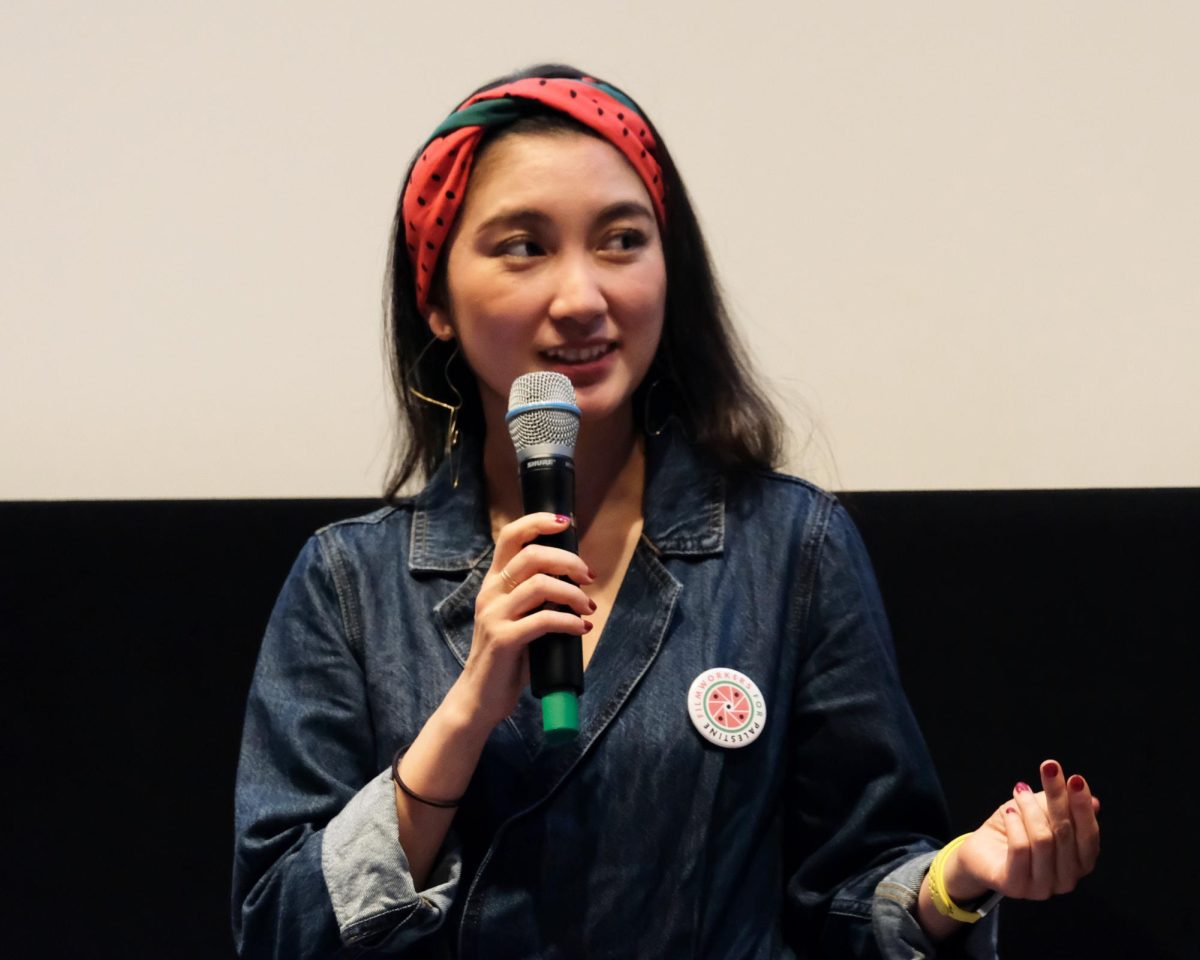
After the domestic release of her documentary, Shiori Ito hopes to keep bringing her message to Japan’s younger generation—most directly by speaking at schools, including ASIJ, which she visited in 2023 as part of the student-led Enough is Enough movement. On March 7, 2023, the journalist appeared alongside Enough is Enough leaders at ASIJ Theatre for a Q&A on her fight for justice in Japan, what the ASIJ community can do to prevent sexual violence, and how to build a safer environment where survivors feel able to speak out. Her visit helped widen a much-needed conversation about the prevalence of sexual assault and harassment at ASIJ, and that momentum has continued through Enough is Enough’s ongoing work in our community. Ultimately, Shiori Ito’s story is one of a sustained refusal to be silenced: a refusal that has pushed Japan toward a future where survivors are believed, protected, and heard.