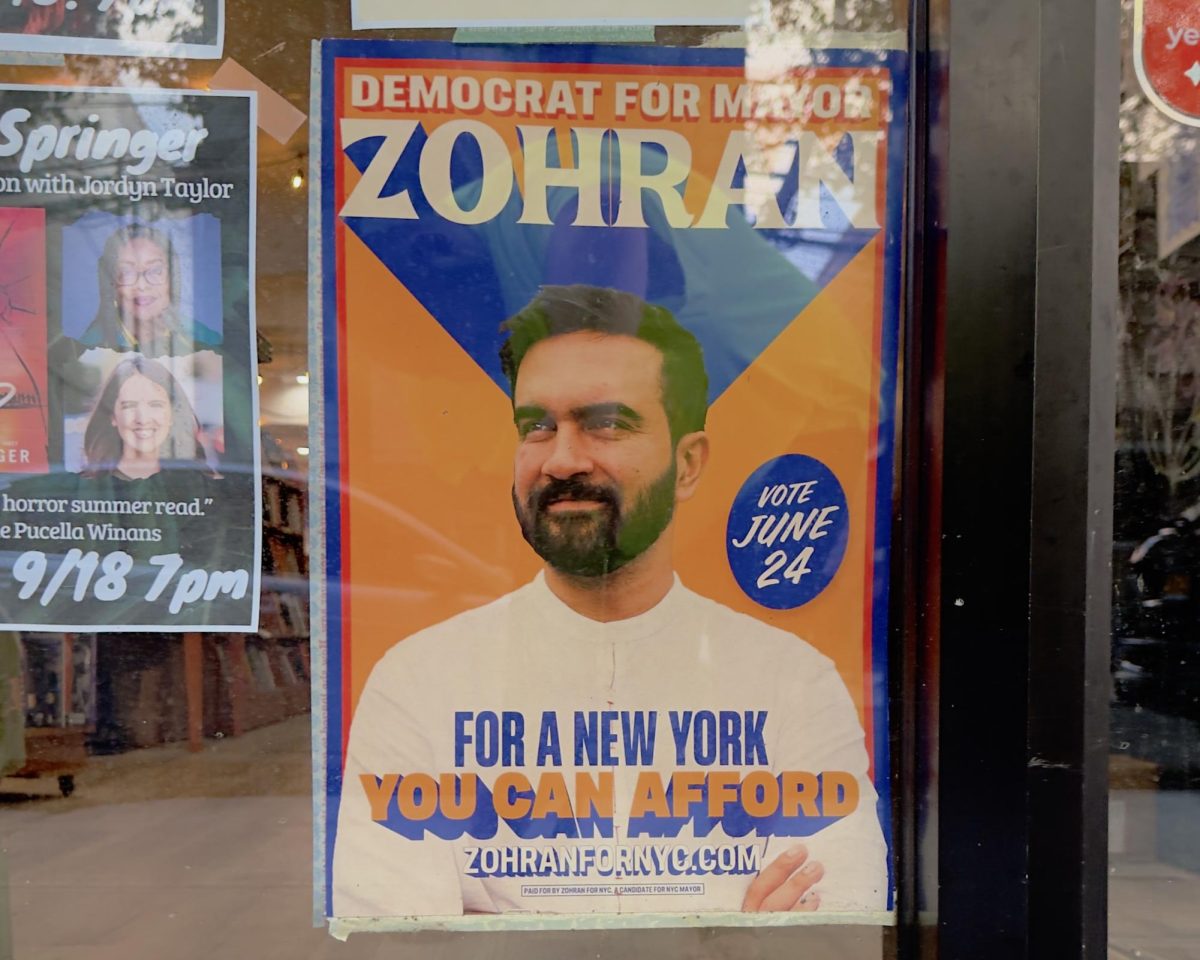
On November 4th, 2025, 34-year-old Democratic candidate Zohran Mamdani declared victory in the New York City mayoral election, beating out Independent Andrew Cuomo and Republican Curtis Sliwa to become the city’s first Muslim and South Asian mayor. Mamdani’s campaign was marked by a focus on affordability, appealing strongly to a young audience, who were a significant portion of his supporters. A self-proclaimed “Democratic Socialist”, his unexpected rise highlights the effect of a cost-of-living focus in winning over voters. Let’s take a look at the notable events of this election to understand exactly how it unfolded.
The Previous Administration
Eric Adams, the former mayor of New York City, was elected as a Democratic candidate in 2021. In September 2024, Adams came under investigation for federal corruption and was indicted for bribery, fraud, and receiving illegal campaign donations. However, in February 2025, after the Trump administration directed prosecutors to drop the corruption charges, Adams’ case was dismissed. These controversies drove Adams’ low approval rating, which ultimately led him to withdraw from the Democratic primary election and instead run for reelection as an independent candidate.
Democratic Primary
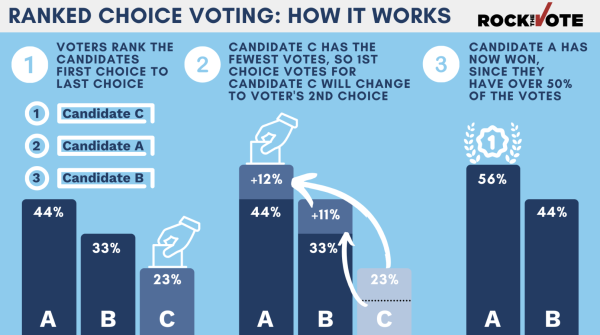
In New York City, primary elections are held using a ranked-choice voting system, where voters rank candidates by preference. If no candidate wins a majority, the lowest-ranked candidates are eliminated, and their votes are redistributed to the voters’ other preferences until a majority winner emerges. Given that New York City leans overwhelmingly Democratic, it is generally safe to assume that the Democratic Primary plays a major role in deciding the leading candidate in the city’s mayoral race.
Democratic candidate Andrew Cuomo, the former governor of New York, announced his bid for mayor of New York City in March 2025. Cuomo’s governorship was marred by considerable controversy: in 2021, he resigned from office due to sexual harassment allegations. His administration was also involved in a COVID-19 scandal, understating the number of deaths in nursing homes during the pandemic.
Cuomo was considered the “moderate” candidate throughout the primary. His proposals include building 80,000 new, affordable housing units and tackling crime by adding 5,000 more police officers. Cuomo was also very focused on combating antisemitism across New York. Backed by well-known figures, including former US president Bill Clinton and former New York City mayor Michael Bloomberg—who at the time of the primary had put $8.3 million into Cuomo’s super PAC—the former Governor seemed like the likely victor of the primary until late in the race.
Mamdani, on the other hand, was a relatively unknown member of the New York State Assembly before the election. His primary campaign focused on affordability, proposing progressive policies that included citywide “free and fast” buses, universal childcare, a rent freeze for nearly a million rent-stabilized apartments, and the establishment of a chain of city-owned grocery stores. He aimed to fund these endeavors by implementing a 2% tax increase on individuals earning over $1 million per year and by raising the corporate tax rate from 7.25% to 11.25%. However, these policies were criticized as unrealistic, as such tax increases require the approval of the state legislature and the New York governor, Kathy Hochul.
Mamdani notably used social media to promote his campaign; his videos portrayed him as a charismatic, energetic candidate, focusing on the everyday issues of average New Yorkers and policy solutions to address them. In contrast to Cuomo, Mamdani has remained adamantly pro-Palestinian, stating that, in accordance with the UN’s investigation into Israel’s conduct in Gaza, the state is committing genocide in Gaza and Israeli Prime Minister Benjamin Netanyahu should therefore be arrested.
This social media promotion, coupled with the “Don’t Rank Evil Andrew for Mayor” movement, which was spearheaded by fellow progressive candidates Brad Lander and Adrienne Adams, slowly but surely diminished the lead Cuomo held in primary polls. Consequently, on election day, Mamdani received 56% of the vote compared to Cuomo’s 44% in the final round of ranked choice voting, allowing him to secure the position of Democratic nominee.
General Election
Although Cuomo was defeated in the Democratic primary, he had launched the “Fight and Deliver” party in anticipation of this result, and was able to run as an independent for that party in the general election.
However, the general election was significantly more hectic than the primary for Cuomo, with Mamdani, Cuomo, Adams, and Republican nominee Curtis Sliwa all gunning for the mayoral position. Cuomo, Adams, and Sliwa were likely to split the vote among themselves, and since the general election does not use ranked-choice voting, Mamdani appeared likely to win, prompting conservative calls for one of the three other candidates to drop out.
Eventually, on September 28th, Adams dropped out of the mayoral race, as he was significantly behind Mamdani and Cuomo, and continued to receive low approval ratings. This most significantly benefited Cuomo, though he was still behind Mamdani in pre-election polling.
Despite Cuomo’s staunch opposition to the President during his first presidency, Trump himself endorsed Cuomo, stating, “Whether you personally like Andrew Cuomo or not, you really have no choice,” and threatened to cut funding to New York City if Mamdani was elected. Despite this surprising endorsement, in the end, Mamdani won the New York City mayoral election with 50.8% of the vote, with Cuomo receiving 41.3% and Sliwa 7.0%.
Transition to Office
Between the end of the election and his inauguration on January 1, Mamdani participated in several initiatives to prepare for his transition to City Hall.
First, Mamdani announced his all-female transition team on November 5, featuring notable figures such as former First Deputy Mayor Maria Torres-Springer and former Federal Trade Commission Chair Lina Khan. He also met with President Trump in a surprisingly respectful meeting where Trump praised Mamdani, expressing hope that he would be a “really great mayor”, in stark contrast to Trump’s previous comments on Mamdani being an “anti-Semitic communist”.
When inauguration day came on January 1, Mamdani began his mayoralty by reaffirming his commitment to affordability and his love for New York City’s immense diversity in an inaugural speech that drew thousands of New Yorkers from across the city. Furthermore, he’s already made moves toward his affordable housing agenda, having revamped the Mayor’s Office to Protect Tenants and signed executive orders to alleviate New York’s housing shortage.
It remains uncertain whether Mamdani will be able to achieve all his goals in a city as demographically diverse and nationally prominent as New York City. Still, given that New York’s governor, Kathy Hochul, endorsed Mamdani in the election, and the two politicians just launched a collaborative effort to make childcare in New York State universal, it appears that Mamdani’s goals may be in reach after all. Beyond New York, his victory highlights the growing importance of affordability in modern politics, as well as the popularity of young progressive candidates in contrast to the “status quo” that has long dominated American liberal politics.