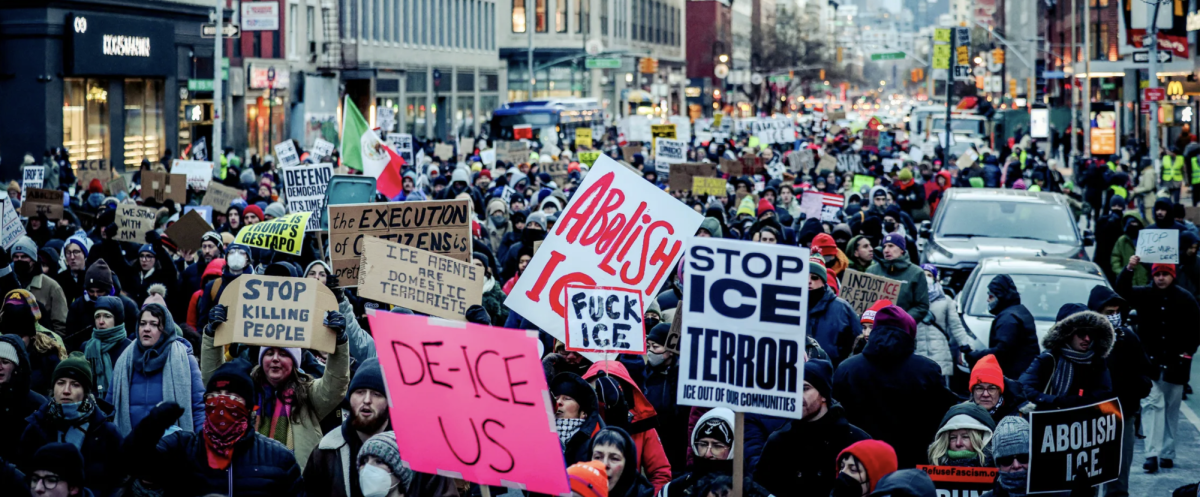
In 2026, fashion and creative expression have moved beyond runways, galleries, and storefronts, emerging as a language of protest amid political and social turbulence. What we wear — and what we craft — has become a way for individuals and communities to express resistance, grief, solidarity, and hope in response to national debates over U.S. Immigration and Customs Enforcement (ICE). Across the United States and around the world, creative communities are turning clothing, accessories, and art into tools of civic expression, reminding us that protest takes many forms.
Most recently, on January 30, small brands and independent designers joined a National Shutdown in solidarity with people affected by ICE actions, choosing to close their shops or donate proceeds to support immigrant communities. For many makers, not selling became a political act, a visual refusal to separate creativity from conscience. But garments didn’t just stay in boutiques. On pop culture’s biggest stages, where trends are born and global audiences watch intently, fashion became a bold voice in the fight against ICE’s hostility against peaceful protestors.
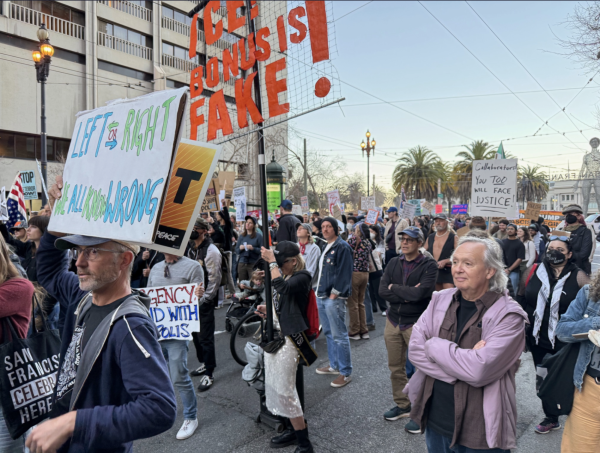
The Red Carpet as a Protest Space

Two of entertainment’s most widely watched award shows—the Golden Globes and the Grammys—turned their fashion stages into spaces of political expression. Rather than just spotlighting couture, photographers and entertainment media captured a different accessory trend: anti-ICE pin badges worn visibly on red-carpet outfits.
At the 83rd Golden Globe Awards hosted on January 11th, many attendees wore black-and-white pin badges with phrases such as “BE GOOD” and “ICE OUT”, in tribute to Renée Macklin Good, a Minneapolis woman who an ICE agent fatally shot. These badges signalled solidarity with those negatively impacted by immigration enforcement and called for compassion and accountability. Coverage of the event showed notable figures wearing the badges both on the carpet and inside the Golden Globe ballroom, introducing a political edge into a traditionally apolitical entertainment ceremony.
Just weeks later, at the 68th Grammy Awards, the anti-ICE accessory resurged in visibility. The same “ICE OUT” pins appeared in jackets and dresses along the Grammy red carpet, capturing media and public attention as symbols of protest against brutal ICE enforcement tactics. Rather than being a fringe statement, the pins were worn across genres and generations of performers. The coincidentally coordinated look helped spread awareness of the movement beyond entertainment headlines, thereby contributing to an awards-season-long visual narrative of dissent.
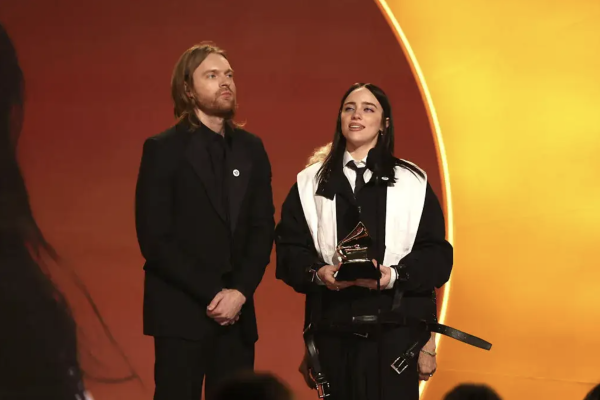
Some artists took the protest beyond accessories: Bad Bunny, who made history as the first Spanish-language artist to win Album of the Year, began his acceptance speech with “ICE out” and called for compassion and humanity in rhetoric that echoed long after the broadcast ended. Billie Eilish, known for her boundary-pushing artistry and activism, paired her statement piece with a custom look and later used her acceptance speech for Song of the Year to say, “No one is illegal on stolen land,” reinforcing Bad Bunny’s message. Additionally, Best New Artist Olivia Dean used her platform to honour immigrant identity, urging listeners to consider the human lives behind headlines and policies.
Crafting Resistance
While award shows turned global platforms into protest spaces, grassroots creative activism brought political expression into everyday communities, demonstrating that protest fashion doesn’t just happen on red carpets.
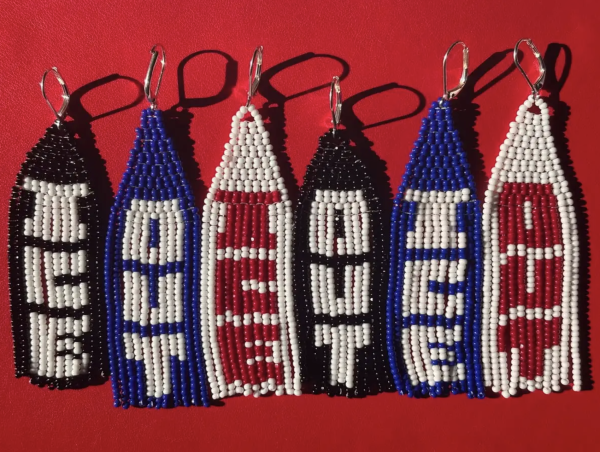
In Minneapolis, artists mobilised their craft to reject ICE’s presence and operations. Screen-printed posters, apparel, and beaded earrings carrying anti-ICE designs were produced in large quantities to support local opposition efforts, with volunteers printing thousands of designs at cooperative studios.
Knitting communities also transformed craft into political expression. Inspired by resistance symbols, knitters across Minnesota and beyond created red knit “Melt the ICE” hats—patterns shared widely as part of a protest movement rooted in craft activism and communal response to ICE enforcement policies.
Beyond the US, student-led rallies in Milan, Italy, also used visual protest tactics ahead of the 2026 Winter Olympics. Hundreds of demonstrators gathered to oppose the reported presence of U.S. immigration agents and closures around the Olympic event, holding banners and blowing plastic whistles that have become yet another symbol of anti-ICE demonstration. The Milan protests show how visual expression—whether in fashion, banners, or chants—travels across borders and timelines, connecting solidarity movements globally.
The Significance of Fashion in Protest
From red-carpet accessories to handcrafted art and knit-wear, 2026 has shown that fashion and creative expression are vital languages of contemporary protest. Wearing or making protest symbols allows individuals to extend their values outward, broadcasting solidarity with those whose stories might otherwise be overlooked.